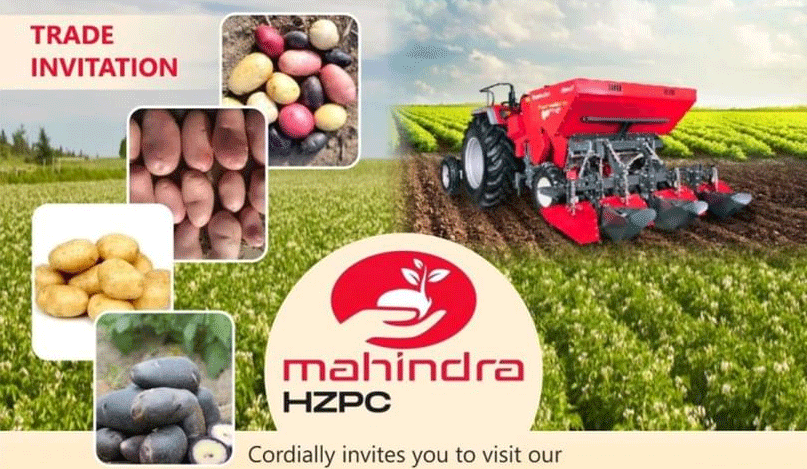
Mahindra HZPC, a key player in India’s seed potato sector, is poised to make a significant impact at the Global Potato Summit 2025 with the launch of seven next-generation varieties. Under the leadership of CEO Davinder Singh Dosanjh, this portfolio is strategically segmented to address specific market needs: Taurus for the crisps sector; Alverstone and Quintera for French fry production; and the table varieties Colomba, Sifra, SunRed, and Sunita for the fresh market. This move is not merely an expansion of offerings but a calculated effort to “revolutionize productivity, quality, and global competitiveness” by providing Indian farmers with the genetic tools required by modern food chains.
This development is critical for India, the world’s second-largest potato producer, where a significant portion of the crop is still destined for the table market. The focus on processing varieties like Taurus, Alverstone, and Quintera directly addresses a major industry gap. According to a 2024 analysis by the Central Potato Research Institute (CPRI), while India’s potato production is robust, less than 10% is currently processed, compared to over 50% in many Western countries. The introduction of high dry-matter, uniform-shaped varieties with “superior processing quality” is a foundational step to catalyze growth in the value-added segment. Furthermore, the emphasis on adaptability to Indian conditions is crucial. With climate volatility posing a significant risk, the integration of traits like disease resistance and regional adaptability, as highlighted in the launch, is essential for sustainable intensification and reducing crop failure risk for farmers.
Mahindra HZPC’s upcoming launch represents a pivotal moment for the Indian potato value chain. For farmers and farm owners, it offers a clear path to higher profitability through access to premium, market-specific varieties that can command better prices. For agronomists and agricultural engineers, it introduces new subjects for developing tailored crop management protocols to maximize the potential of these specialized genetics. For scientists and the industry at large, it underscores a strategic shift from a volume-centric to a value-centric model. By providing a diversified portfolio that strengthens every link in the chain—from the farmer’s field to the processing plant—Mahindra HZPC is not just selling seeds; it is architecting a more resilient and globally integrated future for Indian potato agriculture.

