Innovative Breeding Techniques from Space Aim to Revolutionize Potato Farming
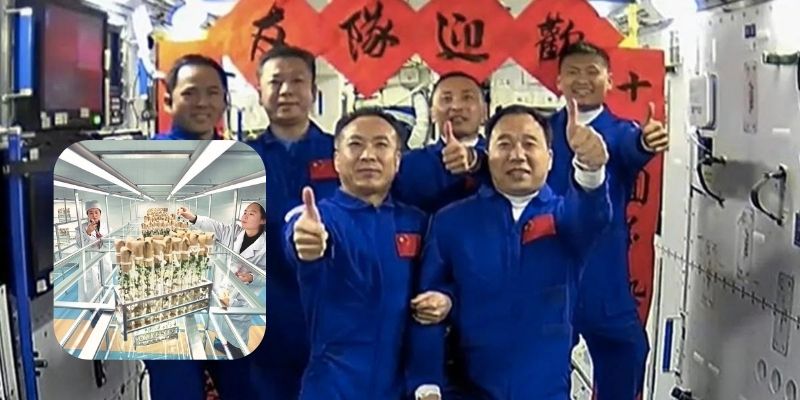
In an unprecedented venture, over 60,000 potato seeds that spent five months in space have been selected for cultivation. This initiative aims to identify special traits that could significantly increase yield and efficiency in potato farming. The seeds were transported aboard the Shenzhou XVI space mission and returned to Earth on October 31, 2023. They have since been handed over to the Shangdu Potato Technology Innovation Center in the Inner Mongolia autonomous territory for further development.
“The cultivation process for these space potatoes will involve test stages in the laboratory, greenhouse, and field,” explained Zhang Linhai, director of the Shangdu Potato Technology Innovation Center, as reported by China Daily. Zhang emphasized the region’s ideal conditions for potato cultivation, citing the ample arable land, high altitude, cold climate, and low incidence of pests and diseases.
Initially, the seeds will sprout in a controlled greenhouse environment before being transferred to pots where they will develop tubers. Subsequently, these plants will be moved to the fields for further evaluation. About five percent of the plants will be selected for additional testing, focusing on yield and disease resistance, Zhang added.
Advanced Genetic Engineering Techniques
Chinese researchers plan to leverage CRISPR technology, a precise gene-editing tool, to enhance the potato varieties further. This technology allows for exact modifications in the DNA of the plants, potentially leading to traits such as high salt-alkali tolerance and improved disease resistance.
“The space environment has the potential to induce genetic mutations in plant seeds, leading to desirable traits such as early maturity, high quality, high yield, and disease resistance,” stated Hu Baigeng, director of the National Engineering Research Center for Potato. This innovative approach, known as space mutagenesis or space-induced mutant breeding, involves exposing seeds to high levels of cosmic rays and other space-specific conditions like vacuums, microgravity, and low geomagnetic interference.
Historical Context and Future Prospects
Since 1987, China has been at the forefront of space breeding studies, launching plant seeds on Shenzhou rockets and retrieving them from orbit. This long-term commitment has yielded successful cultivation of various space crops, including tomatoes, wheat, and rice, across the nation. The recent experiment with potato seeds continues this legacy, aiming to bring cutting-edge agricultural techniques to enhance food security and agricultural productivity.
The seeds used in this project were initially gathered in Laoling, Shandong province, the home base of the National Engineering Research Center for Potato, before their space journey. The potential advancements from this project could mark a significant step forward in agricultural science, offering new solutions to enhance crop resilience and productivity in the face of global challenges.