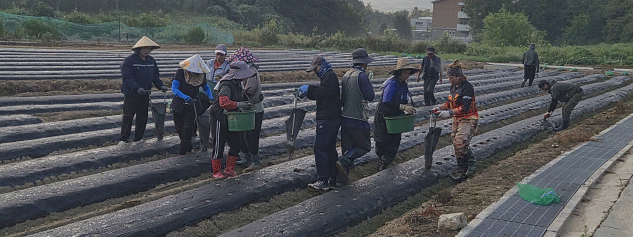
Farmers in Gangneung City have embarked on an innovative agricultural venture, launching the region’s first autumn potato cultivation demonstration project. On August 12th, the Songjeong-dong Potato Association began planting whole seed potatoes across a 1-hectare field, marking a significant departure from traditional spring-only potato monoculture systems toward a more productive double-cropping approach.
The Double-Cropping Initiative
This pioneering project represents a strategic shift in local agricultural practices. Rather than maintaining the conventional single-crop system focused exclusively on spring potatoes, farmers are now establishing a dual-season cropping system that promises to increase land productivity and farm profitability. The four participating farms in Songjeong-dong initially planted Geumseon variety potatoes in March 2024, harvesting whole seed potatoes in June. These underwent a 40-day process of dormancy breaking and light-sprouting in greenhouses before the August planting.
Whole Seed Potato Technology: Advantages and Impact
The use of whole seed potato technology offers significant benefits over cut seed pieces. Research demonstrates that whole seeds minimize rot issues and can achieve emergence rates of up to 80%, substantially contributing to yield increases. According to the International Potato Center, whole seed potatoes can improve yields by 15-25% compared to cut seeds, primarily due to reduced disease transmission and better initial plant vigor.
A study published in the American Journal of Potato Research (2023) found that whole seed potatoes showed:
- 30% reduction in seed-borne diseases
- 22% higher plant establishment rates
- 18% increase in marketable tuber yield
Mechanization Advancements for Efficiency
Gangneung City is actively promoting agricultural mechanization to enhance productivity and reduce labor requirements. The city has introduced 16 types of farm machinery, including subsurface crop harvesters and potato sorters. This mechanization drive addresses the critical labor shortages affecting agricultural regions while improving operational efficiency.
Data from the Korean Society for Agricultural Machinery indicates that proper mechanization can:
- Reduce harvesting labor requirements by 60-70%
- Decrease post-harvest losses by 15-20%
- Improve sorting efficiency by 40-50%
Global Context and Climate Adaptation
The move toward autumn potato cultivation aligns with global trends in climate-adaptive agriculture. As temperature patterns shift, farmers worldwide are adjusting planting schedules to optimize growing conditions. Research from the Food and Agriculture Organization (2024) shows that adjusted planting dates can improve potato yields by 18-32% in temperate regions, particularly as autumn planting helps avoid peak summer heat stress.
The Geumseon variety selected for this project offers particular advantages for autumn production, with studies showing better performance in cooler growing conditions and improved storage characteristics.
Economic Implications for Farmers
The economic potential of double-cropping systems is significant. Based on data from similar initiatives in other regions, farmers implementing successful two-crop systems can increase annual income per hectare by 35-50%. The autumn potato crop particularly benefits from typically higher market prices during the off-season period.
The Korean Rural Economic Institute estimates that diversified cropping systems can improve farm profitability by reducing risk exposure and providing more stable income streams throughout the year.
Gangneung City’s autumn potato cultivation initiative represents a forward-thinking approach to agricultural innovation that addresses multiple contemporary challenges. By implementing whole seed potato technology, establishing double-cropping systems, and advancing mechanization, farmers can significantly enhance productivity, profitability, and sustainability. The successful integration of these approaches demonstrates how traditional farming communities can adapt to changing economic and environmental conditions while maintaining competitiveness. As climate patterns evolve and labor availability changes, such innovative practices will become increasingly vital for the agricultural sector worldwide. The lessons from Gangneung’s project offer valuable insights for farmers, agronomists, and agricultural engineers seeking to optimize potato production systems through technological adoption and cropping system diversification.

