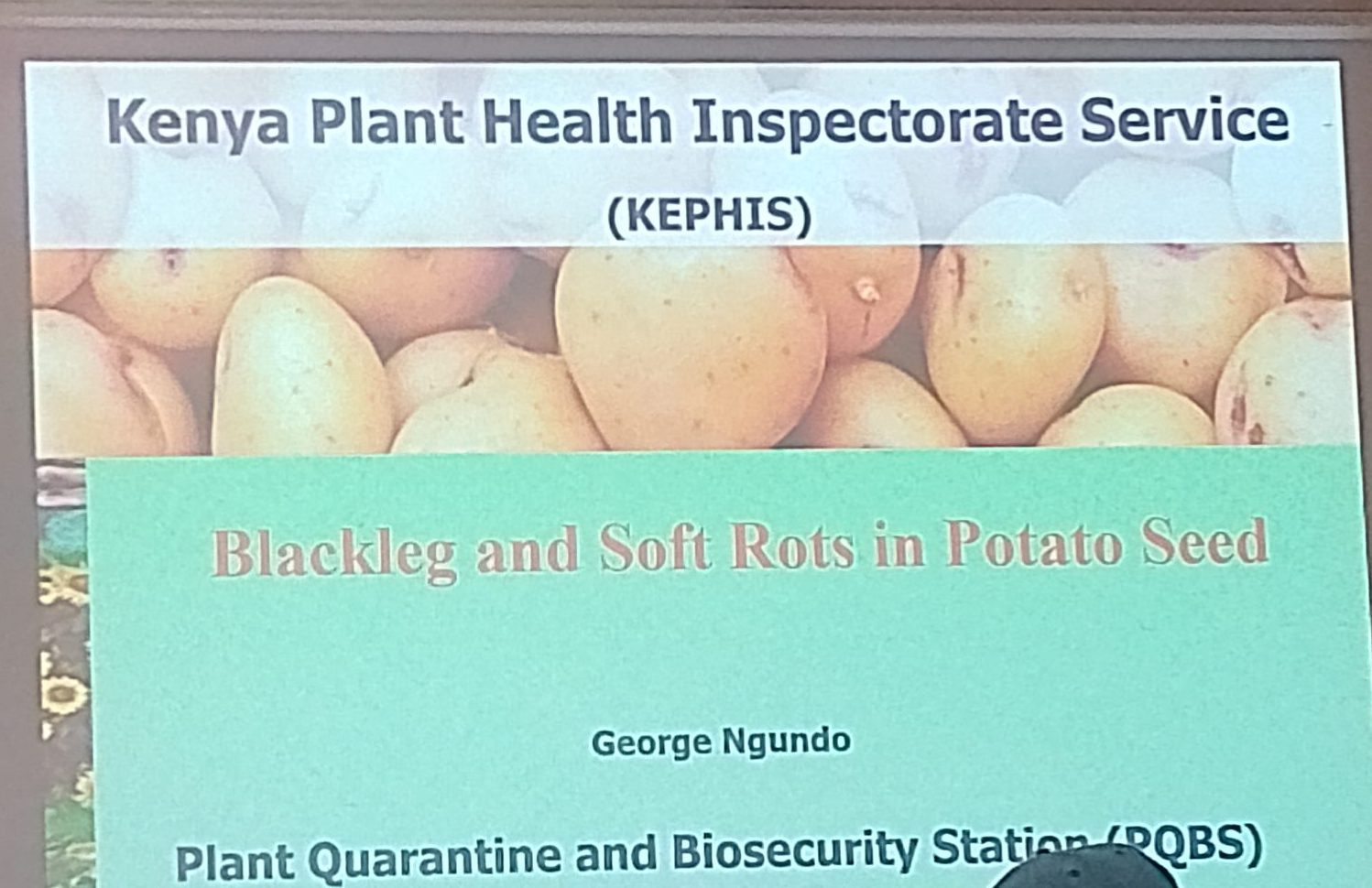
Kenya is stepping up efforts to protect its multi-billion-shilling potato industry following the detection of new and aggressive bacterial diseases that threaten yields and farmer livelihoods.
Until now, Kenya’s official potato seed certification programme has primarily focused on the notorious potato cyst nematodes and Ralstonia solanacearum, the bacterium responsible for bacterial wilt.
However, in a significant policy shift, the Kenya Plant Health Inspectorate Service (KEPHIS) and industry stakeholders have agreed to expand the country’s regulatory framework to include testing for Dickeya species a group of bacteria linked to blackleg and soft rot in potatoes.
The decision follows a high-level stakeholder meeting held at the KEPHIS headquarters in Nairobi, bringing together potato companies, researchers, government agencies, and farmer representatives. Participants reviewed findings from the Potato Bacterial Disease Surveillance Report, a collaborative study between KEPHIS and the Centre for Agriculture and Biosciences International (CABI), which confirmed the presence of new Pectobacterium and Dickeya species in Kenya’s key potato-growing regions.
Understanding the disease: A hidden threat beneath the soil

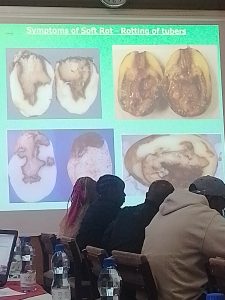
Soft rot and blackleg now recognized as a bacterial disease complex are caused by a group of closely related pathogens known as pectinolytic enterobacteria, including Pectobacterium and Dickeya species.
Once classified under the genus Erwinia, these bacteria are both tuber-borne and waterborne, spreading rapidly under warm, waterlogged conditions especially between 25°C and 35°C.
Soft rot can affect seed potatoes, growing plants and harvested tubers at any stage. It develops when bacteria invade wounded tissue and break down cell walls using pectolytic enzymes, leading to a slimy, foul-smelling rot.
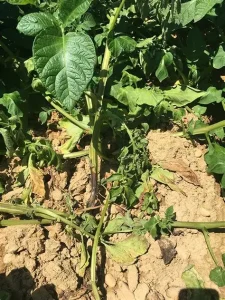
Blackleg, on the other hand, develops when bacteria from infected seed tubers spread to the stems (haulms) of the plant, turning them black and soft at the base. The disease starts as wilting and leaf curling, then progresses to dark rot in the stem often killing the plant.
“Blackleg affects the growing plant, while soft rot attacks the harvested tubers,” explained a KEPHIS pathologist. “Together, they form a deadly duo that can destroy entire potato fields if not properly managed.”
The findings: New bacteria detected in Kenya
The 2019–2020 CABI–KEPHIS survey examined over 3,000 samples from six key potato-producing counties Elgeyo Marakwet, Meru, Nakuru, Narok, Nyandarua and Trans Nzoia.
One in every ten samples tested positive for blackleg-causing bacteria.
The study identified several known pathogens, including:
- Pectobacterium carotovorum subsp. carotovorum,
- P. brasiliense,
- P. wasabiae, and
- P. atrosepticum — detected for the first time in Kenya.
More worryingly, the aggressive Dickeya solani a species responsible for severe outbreaks in Europe was detected on two Kenyan farms, including one producing certified “clean seed.”


Complementary research by Jane Wanjiku Kamau confirmed similar patterns, identifying P. wasabiae and P. atrosepticum as newly established pathogens in Kenya, with Dickeya-like bacteria present across multiple counties.
“These findings show how fast the disease is evolving and adapting,” Kamau noted. “Without strict seed testing and regulation, Kenya risks losing significant yield and seed quality.”
Environmental and agricultural factors
According to experts, several factors favor the spread and survival of these bacteria:
- Free water is essential for bacterial multiplication and survival.
- Poor drainage and oxygen-poor (anaerobic) conditions promote disease development.
- Mechanical injury from hail, tools, or rough handling provides entry points for bacteria.
- Warm temperatures between 25°C and 35°C accelerate disease progression.
The bacteria can also be spread through contaminated water, reused washing systems, soil particles on implements and even animals or insects moving between infected fields.

A growing concern for farmers
Kenya’s potato yields have dropped from 21.2 tons per hectare in 2008 to 8.6 tons per hectare in 2018 (FAO).
Experts say that bacterial diseases, poor seed systems and overreliance on informal seed exchange have driven this decline.
The popular local variety ‘Shangi’, grown by nearly 90% of Kenyan farmers, is particularly susceptible to bacterial infection, making strict testing and awareness essential.
“Each time uncertified seed is exchanged, the bacteria hitch a ride to a new farm,” said a
Nakuru Tubers researcher (Nakuru Tubers). “You may think you’re just sharing a few clean-looking tubers with your neighbour, but those tubers could be carrying bacteria that wipe out entire fields. The only way to stop it is through certified seed, proper storage and disciplined crop rotation.”
Managing and controlling the disease
Because there are no registered chemical cures for soft rot and blackleg, experts recommend integrated management practices:
- Crop rotation with non-host species such as maize, beans, or cereals for at least eight months, which can help eradicate the bacteria from the soil;
- Using certified, disease-free seed potatoes;
- Ensuring well-drained soils and avoiding waterlogging;
- Practicing good field and tool hygiene to prevent spread between farms; and
- Avoiding mechanical injury to tubers during harvesting and handling.
In South Africa, biological products such as Bacillus amyloliquefaciens have been tested as preventive treatments, but in Kenya, emphasis remains on clean seed systems, testing and awareness.
A coordinated national response
The KEPHIS-led meeting resulted in a joint action plan that includes:
- Adding Dickeya spp. to Kenya’s mandatory seed inspection tests;
- Enhancing laboratory diagnostic capacity using molecular tools;
- Expanding farmer training programs on disease identification and prevention; and
- Strengthening county-level surveillance to detect early outbreaks.
“Healthy seed means healthy harvests,” said Dr. Wachira KEPHIS Senior seed inspector. “By regulating Dickeya and improving testing, we’re securing the future of Kenya’s potato industry.”
The Road Ahead
The inclusion of Dickeya testing in Kenya’s seed certification framework marks a major milestone in strengthening the country’s agricultural biosecurity.
It signals a unified national effort from regulators and researchers to farmers and seed companies to protect the potato industry through science-based decision-making.
Experts agree that success will depend on a combination of strict seed certification, regular testing and widespread farmer awareness.
With the right management practices including crop rotation with non-host species for at least eight months to eliminate the bacteria from soil the disease can be brought under control within a single season.
This marks a shift toward long-term resilience, built on stronger surveillance systems, modern diagnostics and partnerships that protect both farmers’ livelihoods and Kenya’s food security.

