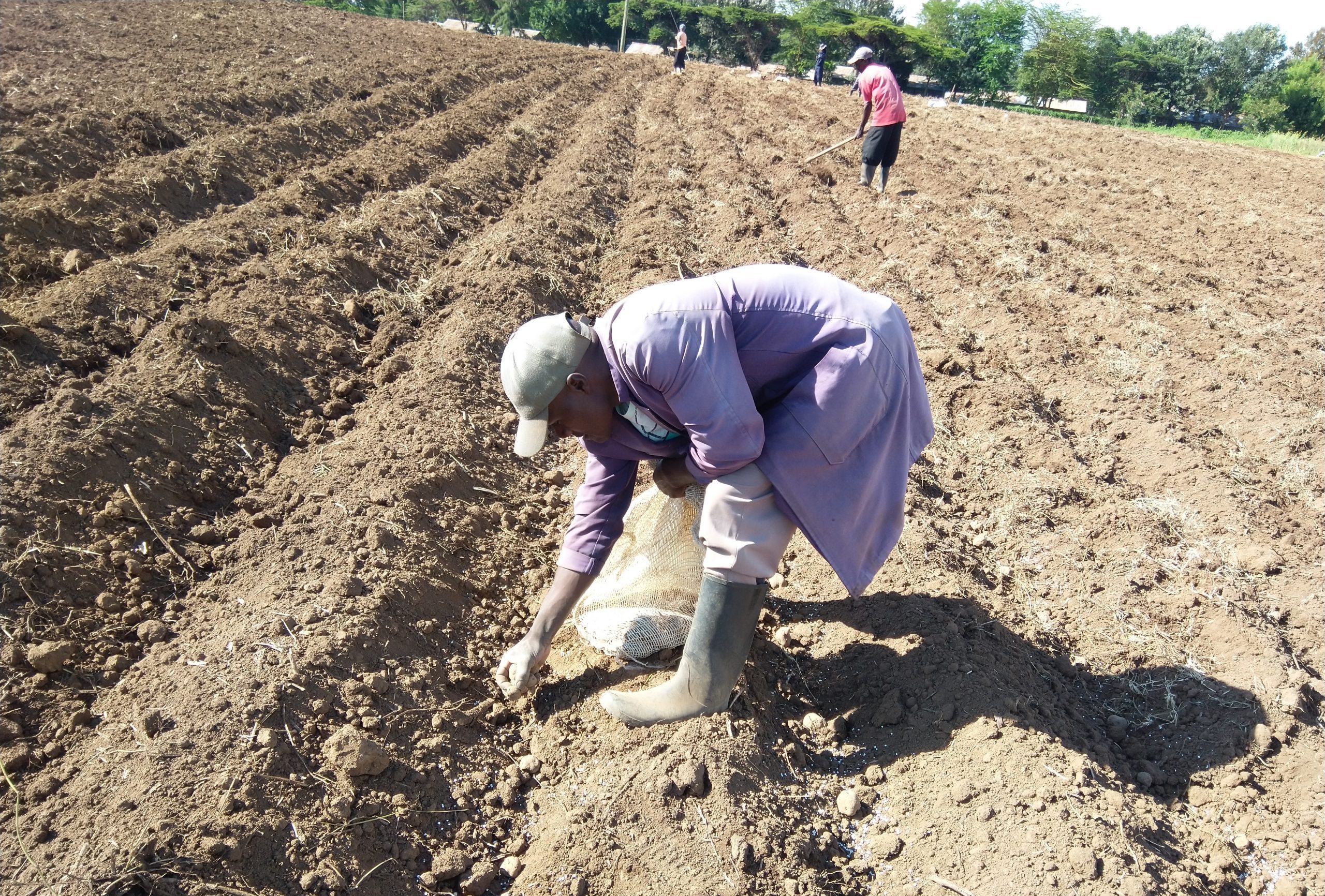
Just a few years ago, few would have imagined that Shem Akuma once a construction worker and Nairobi County cleaner would rise to become one of Njokerio’s promising potato and mixed-crop farmers. Yet today, in the quiet outskirts of Egerton University, rows of vibrant green potato stems sway in the wind, each one representing a chapter in his remarkable transformation.
Shem’s path to agriculture began far from the fields. After years of demanding work in Nairobi first in construction, then in the county cleaning department he moved to Njokerio in search of stability. But life did not instantly improve. He took whatever casual jobs he could find, often working long days for very little pay.
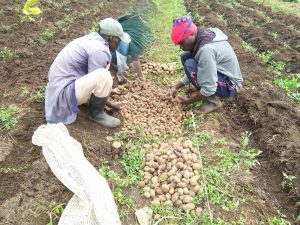
Everything changed in 2019, when he joined Egerton University’s Field 7 under the CARP+ Seed Potato Value Chain programme, supported by the Mastercard Foundation through RUFORUM. Together with his wife, he worked as a daily casual laborer planting, earthing-up and harvesting potatoes. The pay was modest, 300 Kenyan shillings a day (later 350), but the knowledge he gained became priceless.

“I didn’t know this job would open a door,” he said with a warm smile.
“I came here for the 300 shillings, but I will definitely leave with a future.”
A key part of this transformation was the guidance of Prof. Anthony Kibe, the long-standing potato lead under CARP+ and a pillar of the potato team at Egerton University. His leadership exposed casual workers and students to world-class potato technologies opportunities few expected to access. Many workers left, but Shem stayed long enough to learn deeply. 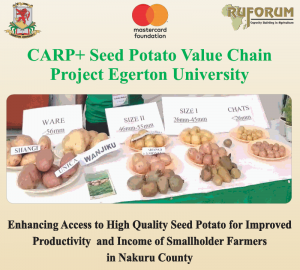

“Shem is the one we can talk about because he stayed, he watched, he practiced and he grew,” the team often says.
Shem was trained in advanced production technologies such as hydroponics, aeroponics and apical cuttings systems that felt more like high-tech engineering than farming. He also learned the classes of certified potato seed, proper mother plant management and the strict hygiene standards required in greenhouse environments, especially for producing clean seed.
“I used to think potatoes were just planted in soil and harvested,” he said, laughing.
“But when I saw aeroponics, I said, ‘Eh! These potatoes are more educated than me.’”
Armed with new skills, Shem leased a small plot near Njokerio and planted his own potatoes. His first harvest astonished him.
“The first time I harvested, I knelt down and thanked God. I had never made that kind of money from any casual job.”
With the earnings, he was able to better support his two children one now in Junior High and the other in Grade 5 and bring stability to his home. One of his proudest milestones was purchasing a motorbike, a moment that still fills him with gratitude.


“This machine?” he said proudly, tapping its side.
“Potatoes bought it. Every shilling.”
The motorbike has since become more than just transport it carries his children, helps him run farm errands and even brings in extra income through small deliveries. It is both a tool and a symbol of how far he has come.
But Shem’s journey did not end there. Today, he is an “upgraded casual” under the Kenya Sustainable Potato Initiative, sponsored by AGRA. He assists during field days, guides farmers and continues to learn from agronomists and seed experts.
“Field days showed me the real potato world. Now when someone talks about the value chain, I don’t just pretend I actually understand it.”
His ambitions continue to grow. Shem has paid half the cost for a new piece of land and plans to venture into livestock rearing and fodder production. He has also adopted crop rotation, integrating other crops to improve soil health and diversify income. He is already in discussions with Wakulima Help Desk Company (https://www.linkedin.com/company/wakulima-help-desk) as he prepares to expand into larger-scale mixed farming.
Looking across his flourishing fields, Shem reflects with gratitude and pride:
“Potatoes lifted me. I started as a casual earning 300 shillings. Today, I’m a farmer with plans and a motorbike to get me there.”

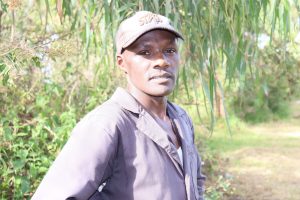


From Nairobi’s construction sites to Njokerio’s green fields; from casual labor to a knowledgeable role in the potato value chain; from mere survival to building a future Shem Akuma’s story proves that with curiosity, dedication and opportunity, even the humblest crop can change a life.

