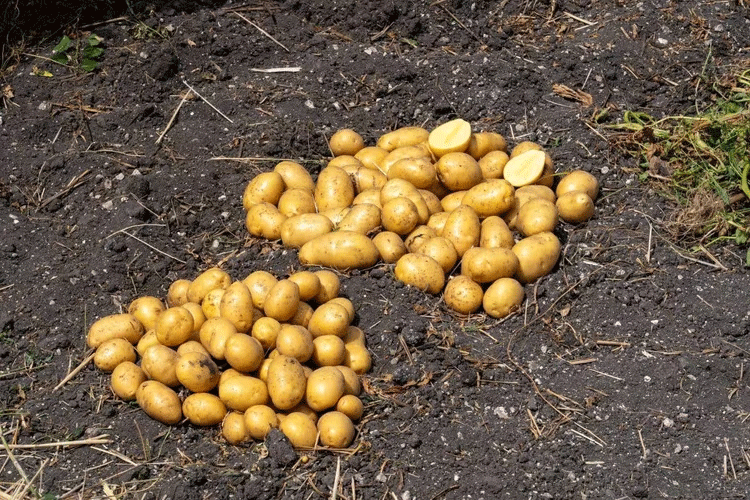
The agricultural season in Russia’s Predgorny District is showcasing a robust potato harvest, with digging operations for autumn varieties now underway. According to the district administration, the total planted area spans 2,000 hectares, with the majority (1,600 ha) managed by private farm holdings and the remaining 400 hectares by larger agricultural enterprises. The current average yield is estimated at an impressive 180 centners per hectare (18 metric tons/ha). This performance is projected to deliver a total harvest of approximately 36,000 tons of potatoes for the district.
Production is concentrated in key locations known for their potato expertise: the villages of Borgustanskaya and Suvorovskaya, the settlement of Vinsady, and the khutor of Novoborgustansky. Farmers there are cultivating a portfolio of popular consumer varieties including ‘Colombo’, ‘Nevsky’, ‘Bellarosa’, ‘Deriese’, ‘Red Star’, ‘Ramona’, and ‘Picasso’. This diverse selection helps mitigate risk and caters to different market preferences. The harvested potatoes are distributed both within the domestic market of Stavropol Krai and to other regions across Russia.
A significant factor behind this productivity, as highlighted by district head Nikolai Bondarenko, is effective government support. Local farmers receive subsidies specifically for open-field vegetable cultivation and for the purchase of elite seeding material. This strategic financial intervention directly addresses two key cost drivers for producers, incentivizing investment in quality inputs and modern practices. The administration directly links these subsidies to the positive trends in yield and production volume, presenting a compelling case for the effectiveness of well-targeted agricultural policy.
The Predgorny District harvest is more than a local news story; it is a tangible example of how targeted state support can directly enhance agricultural productivity. By subsidizing critical inputs like high-quality seeds, the program reduces the financial barrier for farmers to adopt better genetics, which is a primary factor in achieving higher yields. This model of focused subsidy allocation—supporting specific, impactful practices rather than providing blanket assistance—proves effective. For agronomists and farm owners in other regions, Predgorny’s success offers a blueprint: strategic investment in quality planting material, coupled with support for open-field production systems, can significantly boost output, strengthen regional food security, and enhance economic returns for farming operations.

