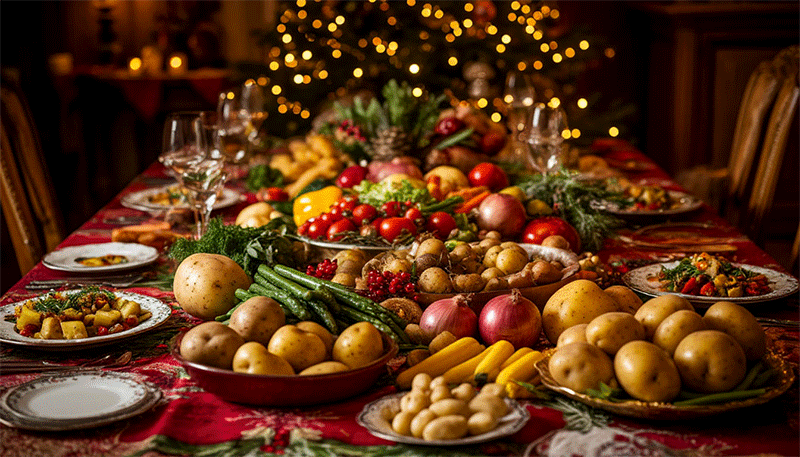
The Thanksgiving holiday creates one of the most concentrated demand surges in the fresh produce calendar, testing the limits of harvest, storage, and packing logistics. A look inside Wisconsin’s Alsum Farms reveals how vertical integration and collaborative grower networks are key to meeting this massive, time-sensitive challenge.
At Alsum Farms & Produce, a fifth-generation operation, Thanksgiving week means processing “30 loads of potatoes a day,” starting at 4 a.m., to meet national demand. Growing 2,700 acres of Wisconsin Healthy Grown potatoes, the farm employs a fully vertically integrated model, controlling the process from planting to shipping. This control is critical for delivering a consistent, high-quality product during the holiday crunch. Nick Campbell, Chief Production and Engineering Officer, emphasizes that the industry’s success hinges on deep collaboration, not competition, with “generations of coordination and relationships” forming the backbone of the supply network that packs and ships potatoes to feed millions in a single week.
This operational model is supported by Wisconsin’s significant agricultural standing. As the #3 potato-producing state in the U.S. and the #1 producer east of the Mississippi, Wisconsin’s climate and sandy soils are ideal for potato cultivation. The state’s output is a critical component of the national picture; according to the USDA’s National Agricultural Statistics Service (NASS), Wisconsin harvested approximately 1.75 billion pounds of potatoes from 63,000 acres in 2023. The “Wisconsin Healthy Grown” program mentioned by Alsum aligns with a broader consumer trend, as a 2024 report by FMI – The Food Industry Association found that 65% of consumers consider “locally grown” an important purchase factor for fresh produce, especially during holiday seasons.
The Thanksgiving rush is more than a seasonal peak; it is a real-world stress test for agricultural supply chains. The success of operations like Alsum Farms demonstrates that a combination of vertical integration for quality and logistics control, coupled with strong, multi-generational collaborative networks among growers, is an effective model for navigating extreme demand volatility. For farmers and agricultural engineers, it underscores that building resilient, relationship-driven systems is just as important as cultivating a high-yielding crop to capitalize on the most profitable windows of the year.

