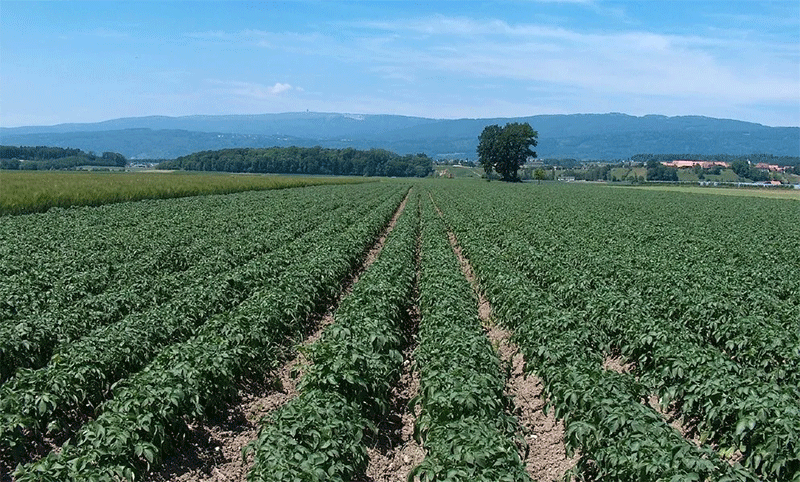
A comprehensive new report from ResearchAndMarkets.com forecasts robust growth for the global potato market, projecting it will swell from USD 119.85 billion in 2024 to USD 178.19 billion by 2032, representing a compound annual growth rate (CAGR) of 5.08%. This growth is not merely a volume play but a value-driven evolution, fueled by rising global consumption and relentless innovation in processed forms like frozen fries, chips, and dehydrated flakes. The analysis identifies several interconnected megatrends shaping the sector. Geopolitical tensions and changing tariffs are forcing a strategic re-evaluation of supply chains, pushing major players like McCain Foods and Lamb Weston toward greater localization and collaboration with domestic suppliers to mitigate volatility. Concurrently, consumer demand is fragmenting across channels, from traditional retail to booming e-commerce and foodservice, requiring producers to be agile in their product and distribution strategies.
For those on the production front, the implications are profound. The report underscores that variety selection and cultivation methods are no longer just agronomic decisions but core commercial strategies, with distinct markets for types like russet (ideal for processing) and red or gold potatoes (for fresh markets). Furthermore, technology and sustainability have moved from buzzwords to critical business levers. A 2023 study in the Potato Research journal corroborates this, highlighting that precision agriculture technologies can reduce water and fertilizer use by 15-20% while improving tuber quality and yield—a key advantage in a competitive market. This aligns with the report’s emphasis on traceability and sustainable practices as powerful differentiators to meet the demands of downstream buyers and conscious consumers. The push for energy-efficient processing and innovative, sustainable packaging further illustrates how the entire value chain is being re-engineered for resilience and market appeal.
The trajectory of the global potato market presents a clear mandate for industry stakeholders. Success will be determined not by simply expanding acreage, but by strategically integrating into more resilient, value-added supply chains. Producers and agribusinesses must prioritize varietal innovation, adopt precision agronomy to enhance sustainability credentials, and forge partnerships that allow them to navigate trade complexities and capitalize on the soaring demand for processed potato products. The next decade will reward those who are agile, efficient, and closely attuned to the evolving landscape of global trade and consumer preference.

