A Guide to Maximizing Yield and Market Success with the Right Potato Varieties
Choosing the right potato variety is one of the most critical decisions for potato farmers in Kenya’s diverse agricultural landscape. Selecting the appropriate variety not only influences the yield and quality of the harvest but also ensures the crop is well-suited to local conditions, market demands, and disease challenges. Nakuru Tubers outlines five essential factors to consider when selecting the best potato variety for your farm:
- Agro-Ecological Zone Compatibility
Kenya’s varied topography means that certain potato varieties perform better in specific regions. High-altitude, cooler areas are ideal for varieties such as Chulu, Unica, and Shangi. These varieties thrive in cooler climates, ensuring optimal growth. In contrast, low-altitude regions, which may experience higher temperatures and drier conditions, benefit from drought-resistant varieties like Arizona and Annet, which are well-adapted to these challenging environments. - Disease Resistance
Disease resistance is crucial to protecting your crop and securing a healthy harvest. Varieties such as Asante, Kenya Karibu, and Kenya Mpya are known for their tolerance to major diseases, particularly late blight, a common threat to potato crops. Choosing a variety with strong resistance reduces the need for chemical interventions and can lead to more sustainable farming practices. - Market Demand and End-Use
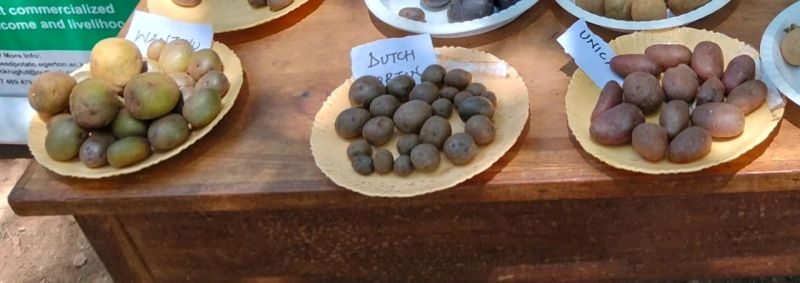
Understanding market preferences is essential for profitability. Farmers must consider whether they are growing for table consumption or processing. For table consumption, Shangi remains a popular variety due to its taste and texture. Unica is well-suited for making chips, while Dutch Robin and Markies are preferred for crisp production. Aligning the variety with market demand ensures better sales and satisfaction across the value chain. - Maturity Period
For farmers seeking quick returns, early-maturing varieties are a strategic choice. Varieties like Shangi, Wanjiku, and Nyota mature faster, allowing farmers to harvest and sell their crop sooner. Aligning the maturity period with the local growing season ensures that the crop is ready for market at the most opportune time, maximizing both yield and profitability. - Yield Potential
High-yielding varieties are a top priority for most farmers. Varieties such as Wanjiku, Unica, and Sherekea are known for their high yield potential, offering larger and more consistent tubers. When selecting a variety, consider not only yield but also tuber size and quality, especially if you are targeting specific markets that demand larger or more uniform potatoes.
By carefully considering these five factors—agro-ecological compatibility, disease resistance, market demand, maturity period, and yield potential—potato farmers in Kenya can make informed decisions that enhance their productivity and profitability. Selecting the right variety tailored to both the growing conditions and market preferences will ultimately contribute to a more sustainable and successful potato farming venture.