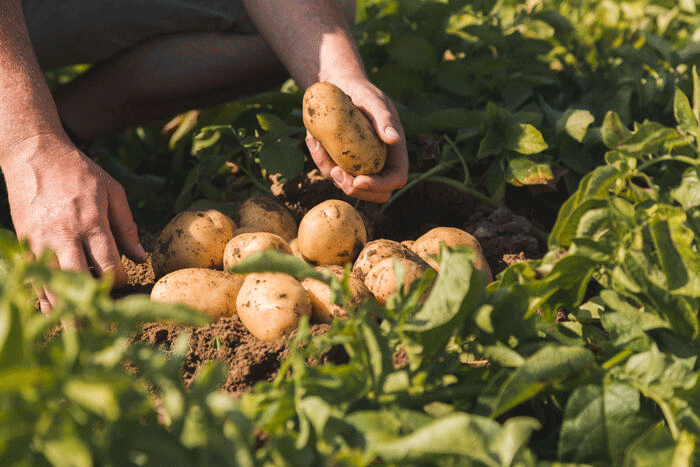
The new potato harvest in Italy’s Guà region, spanning Verona, Vicenza, and Padova, has begun with promising quality despite a 20% decline in yields compared to previous years. The favorable climate—characterized by abundant rainfall and mild temperatures in April and May—has enhanced the potatoes’ organoleptic properties, making them stand out in the market.
The Colomba variety, known for its golden skin, yellow flesh, and medium size (45-85 mm diameter), dominates production. Grown in the nutrient-rich red soils along the Guà River, these potatoes are versatile for culinary use and highly sought after in domestic and international markets, including France, Germany, and Spain.
Rising Costs Threaten Profitability
While quality remains high, production costs have surged dramatically. Seed prices alone have jumped from €1,200/ton in 2020 to nearly €2,000/ton today, with total production expenses reaching €14,000 per hectare. Farmers also face a lack of government subsidies—unlike those available for crops like corn or industrial tomatoes—which further strains profitability.
Market Channels and Future Concerns
Most of Guà’s potatoes are sold through local traders and intermediaries, distributing across Italy and abroad. However, farmers report declining interest in potato farming, as many consider it no longer economically viable. Without policy support or cost relief, the region risks losing potato cultivation to more subsidized crops.
A Sector at a Crossroads
Guà’s new potato harvest demonstrates resilience in quality but faces existential threats from rising costs and policy neglect. To sustain this tradition, targeted financial aid, research into cost-efficient farming, and stronger market strategies are essential. Otherwise, Italy may lose a unique agricultural gem.

