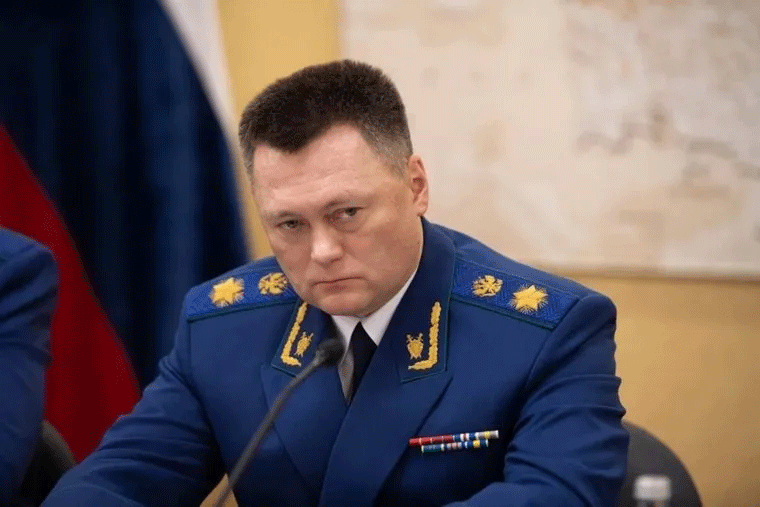
In a sweeping regulatory action, Russian prosecutors have issued formal warnings to more than 5,300 companies accused of unjustified price increases on essential food items in 2025. The crackdown, personally overseen by Prosecutor General Igor Krasnov, represents one of the most significant market interventions in recent Russian agricultural history and highlights the government’s increasing willingness to directly regulate food pricing.
According to official statements, prosecutors analyzed more than 400 cases of food price increases during the first six months of 2025, with particular attention to socially significant commodities including potatoes, milk, eggs, and butter. The scale of intervention—affecting thousands of businesses—suggests systematic concerns about market practices rather than isolated incidents. This regulatory attention comes amid global food price trends that have seen fluctuations due to climate impacts, supply chain disruptions, and energy cost increases, though Russia’s approach appears uniquely direct in its market intervention.
The potato market received specific mention as a success story for this interventionist approach. Prosecutor General Krasnov noted that potato prices had reached record levels in 2025 before stabilizing through government action. “A whole range of measures, including with the participation of prosecutors, made it possible to stabilize prices,” Krasnov stated. “The situation is now leveling off. The cost of potatoes has noticeably decreased.”
This market intervention occurs against a backdrop of global food security concerns. According to the FAO’s 2025 Food Outlook, global food prices have remained volatile, with the FAO Food Price Index showing fluctuations between 5-8% quarterly throughout 2024-2025. However, Russia’s direct regulatory approach differs from the market-based mechanisms typically employed in most agricultural economies.
The economic implications for agricultural producers and distributors are significant. While consumers may benefit from lower prices in the short term, such interventions can create market distortions that affect production incentives. Historical data from similar interventions suggests they may lead to reduced investment in agricultural sectors over the medium term, potentially exacerbating supply issues.
For farmers and agribusinesses, this regulatory environment creates additional complexity in pricing and marketing decisions. The emphasis on “socially significant” commodities means that staple crops face greater scrutiny than specialty products, potentially influencing planting decisions and crop selection.
Russia’s aggressive intervention in food pricing represents a distinctive approach to managing food security and affordability concerns. While successful in reducing potato prices in the short term, the long-term effects on market efficiency, production incentives, and investment in the agricultural sector remain uncertain. For agricultural professionals operating in this environment, understanding regulatory risks and maintaining transparent pricing practices becomes increasingly important. This situation highlights the delicate balance between market mechanisms and government intervention in ensuring both food affordability for consumers and sustainable returns for producers. The Russian experience may offer lessons for other countries grappling with similar food price volatility challenges, though the appropriateness of such direct intervention remains a subject of debate among agricultural economists.

