The UK government has taken a major step toward adopting gene-edited crops by implementing secondary legislation under the Genetic Technology (Precision Breeding) Act 2023. The new rules, presented to Parliament in February 2025 and reviewed by a committee in March 2025, establish a science-backed regulatory framework for precision-bred plants in England, covering environmental release, food safety, and commercialization.
This move aligns England with other progressive agricultural nations, such as Japan and Argentina, which have already embraced gene-editing technologies to enhance crop resilience and sustainability. According to a 2024 report by the Agricultural Biotechnology Council, gene-edited crops could reduce global food waste by up to 30% while cutting pesticide use by 20%—a game-changer for both farmers and the environment.
Phytoform’s CRISPR-Edited Potatoes: A Solution to Food Waste
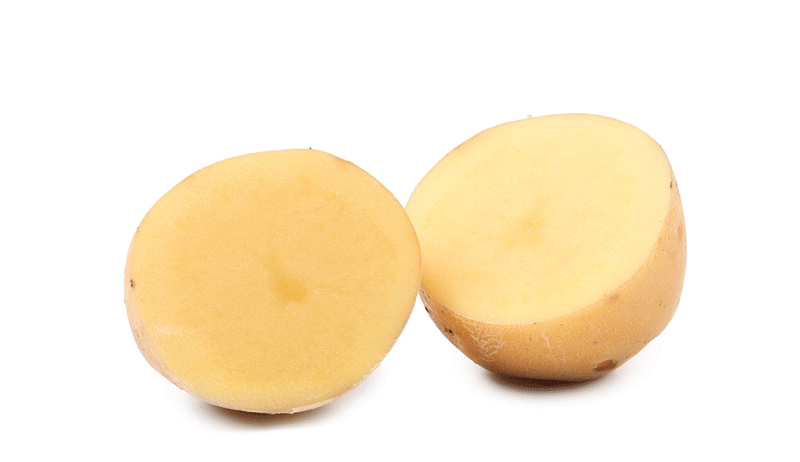
One of the first beneficiaries of this regulatory shift is UK-based agtech startup Phytoform, which has developed non-browning potatoes using CRISPR gene-editing. These potatoes are engineered to block polyphenol oxidase (PPO), the enzyme responsible for browning, without altering flavor or texture.
Food waste is a critical issue in agriculture—1.3 billion tons of food is lost or wasted globally each year (FAO, 2023), with post-harvest losses in potatoes alone accounting for up to 30% of production. Phytoform’s innovation could help retailers and consumers keep potatoes fresh longer, reducing unnecessary waste.
William Pelton, CEO of Phytoform, emphasizes the environmental impact: “When potatoes are discarded due to browning, all the resources—water, fertilizers, energy—that went into growing them are wasted. Our technology ensures more produce reaches the table.”
How CRISPR Differs from Traditional GMOs
Unlike conventional GMOs, which introduce foreign DNA, CRISPR allows for precise, targeted edits within a plant’s own genome. This distinction has helped gain regulatory and consumer acceptance, as seen in countries like the U.S. and Brazil, where CRISPR-edited crops are already in use.
A 2025 study from Nature Plants found that 90% of consumers were more accepting of gene-edited foods compared to GMOs, provided they offered clear benefits like reduced waste or enhanced nutrition.
What’s Next for UK Farmers and Agronomists?
With the legal framework now in place, Phytoform plans to seek approval for commercial cultivation of its non-browning potatoes. If successful, this could pave the way for other drought-resistant, disease-tolerant, and nutrient-enhanced crops developed through gene editing.
For farmers, this means:
✔ Higher marketable yields (less waste from browning)
✔ Potential premium pricing for longer-lasting produce
✔ Reduced reliance on chemical treatments (as future gene-edited crops may resist pests naturally)
A Sustainable Future for Agriculture
The UK’s embrace of precision breeding marks a turning point for agricultural innovation. Gene-edited crops like Phytoform’s non-browning potatoes offer tangible solutions to food waste, sustainability, and farm profitability. As more such products enter the market, collaboration between scientists, policymakers, and farmers will be key to maximizing their benefits.

