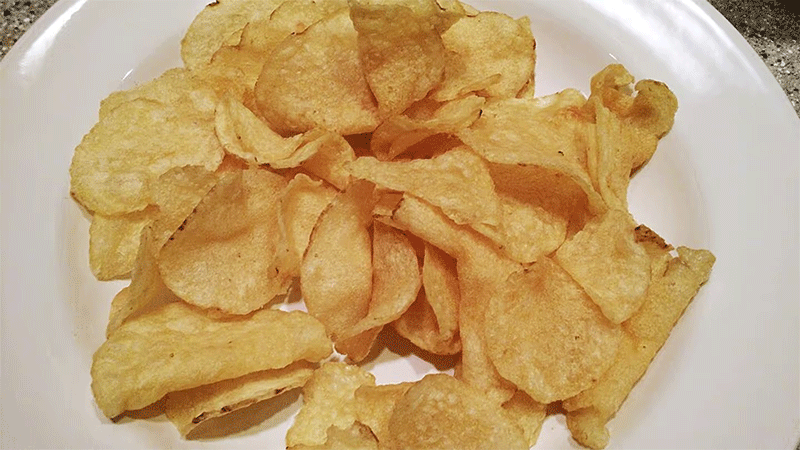
In a recent comprehensive taste test by Food & Wine magazine, the Cape Cod Original Sea Salt Kettle Cooked Potato Chip achieved a rare and telling perfect score of 10 out of 10. The testers’ feedback provides a critical blueprint for potato breeders and growers. The winning chips were celebrated not for exotic flavors, but for fundamental, potato-centric qualities: a clean snap, a resistance to crumbling, and most importantly, a flavor that tasted like “actual potatoes,” not cooking oil. This highlights a clear consumer shift towards authenticity and the intrinsic sensory qualities of the potato itself.
This trend is supported by broader market data. According to a recent report from Mintel on snack food trends, consumers are increasingly seeking “clean-label” products with simple, recognizable ingredients and a perception of minimal processing. The success of other top-ranking chips in the test, such as Trader Joe’s Ode to the Classic Potato Chip (praised for its “rustic flavor”) and Siete’s kettle-cooked chips (noted for a “just-harvested taste”), underscores this demand. The panel’s preference for chips that deliver flavor “more farm than fryer” signals a significant opportunity for the supply chain to emphasize varietal selection and post-harvest practices that preserve and enhance the potato’s natural flavor profile.
The Agronomic Implications of Flavor and Texture
For farmers, agronomists, and agricultural engineers, this consumer preference data is a strategic guide. The desired “clean snap” and structural integrity are directly influenced by the potato’s dry matter and sugar content. Varieties with high solids, such as Atlantic or Snowden, which are commonly used for kettle-style chips, are better suited to meet this textural demand. Furthermore, achieving a consistent, non-oily flavor requires a focus on post-harvest handling. Research from the University of Idaho’s Potato Storage Research Program indicates that proper curing and storage at optimal temperature and humidity levels are critical for minimizing reducing sugars, which not only prevent undesirable browning but also help ensure a clean, nutty flavor rather than a burnt or bitter taste after frying.
The success of these top-tier chips demonstrates that the market is segmenting. While volume production will always have its place, a premium, high-value segment is flourishing, driven by qualities that originate long before the potato reaches the processing plant. This creates a compelling case for growers to collaborate with breeders and processors to identify and contract the cultivation of specific varieties that deliver these superior eating experiences.
The perfect score awarded to the Cape Cod potato chip is not an isolated event but a reflection of a powerful consumer trend with direct implications for the agricultural industry. The message is clear: there is a growing and lucrative market for potatoes that offer authentic, robust flavor and superior textural qualities. To capitalize on this, the industry must prioritize the entire value chain—from varietal selection and agronomic practices to meticulous post-harvest storage—all oriented towards delivering the “actual potato” taste and experience that modern consumers are actively seeking. This alignment between field and flavor is the future of competitive potato production.

