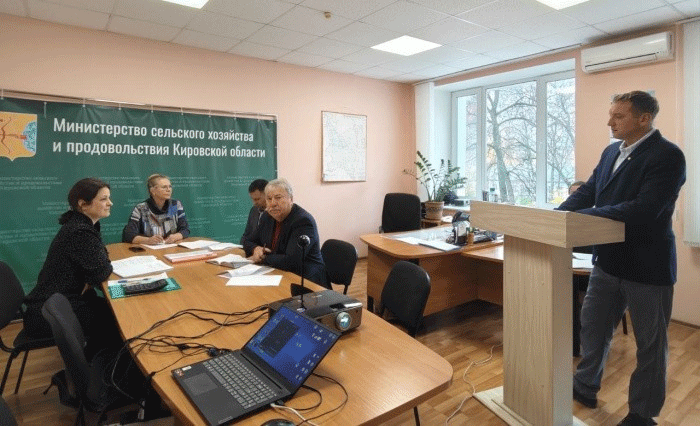
The agricultural cooperative “Alliance” (SPSSPOK «Альянс») in the Kirovo-Chepetsk district is set to establish a primary processing line for potatoes and open-field vegetables, funded by a 10-million-ruble grant from the regional budget. The total project cost is 15 million rubles (approximately $165,000 USD), which will be allocated towards acquiring a building and modern processing equipment. The stated goal is to produce up to 288 tons of vacuum-packed, pre-processed vegetables annually for food enterprises within the Kirov region by 2030. This move signifies a strategic shift from solely commodity-based production to creating value-added products, a trend increasingly vital for farm profitability.
The core product—vacuum-packed, pre-processed vegetables—taps directly into significant market dynamics. The global market for processed fruits and vegetables is projected to grow steadily, driven by consumer demand for convenience and the food service industry’s need for efficiency. Vacuum packaging, in particular, is a key technology in reducing food waste, a critical issue globally where an estimated 14% of food produced is lost between harvest and retail according to FAO data. By moving primary processing closer to the production site, the cooperative can minimize transport weight, extend shelf-life significantly by removing oxygen, and provide local food manufacturers with a consistent, high-quality ingredient. This model of “local for local” processing strengthens regional food systems and reduces the carbon footprint associated with long-distance logistics.
The “Alliance” cooperative project is a microcosm of a larger, necessary evolution in agriculture: the integration of on-farm or local processing to enhance value capture and sustainability. By utilizing state grants to mitigate initial capital expenditure, the cooperative is positioning itself to meet the growing demand for convenient, high-quality, and locally sourced food ingredients. This initiative not only promises economic benefits for the cooperative members but also contributes to a more resilient and less wasteful regional food supply chain, serving as a potential model for other small to mid-scale farming operations.

