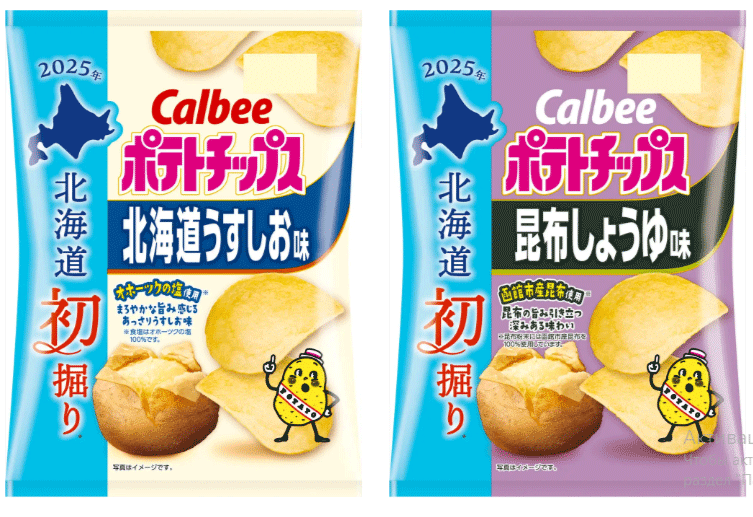
On August 4, 2025, Calbee Inc. launched its Hokkaido First-Dig Potato Chips—a limited-edition snack made from the year’s earliest Hokkaido potato harvest. Available in two flavors (Otsu-Shio Light Salt and Kombu Soy Sauce), the product celebrates Japan’s potato-growing cycle, where harvests begin in Kyushu (early summer) and move northward to Hokkaido (July–August).
Key Agricultural Insights Behind the Product
- Strategic Sourcing & Vertical Integration
- Calbee’s subsidiary, Calbee Potato Inc., has partnered with Hokkaido farmers for 40+ years to grow chip-specific potato varieties.
- 2025 production volume: Undisclosed, but Hokkaido supplies ~70% of Japan’s potato chip potatoes (Japan Agri-Exchange, 2024).
- Terroir-Driven Flavors
- Light Salt uses 100% Okhotsk Sea salt, chosen for its mild umami.
- Kombu Soy Sauce features Hakodate-grown kelp, a nod to Hokkaido’s $120M seaweed industry (Hokkaido Gov’t, 2024).
- Marketing Freshness
- The 2025 packaging redesign emphasizes “first-dig” potatoes—harvested at peak sugar content (16–18% starch vs. 12–14% in stored tubers).
- Limited batches create scarcity; 2024’s run sold out in 3 weeks (Calbee sales data).
Why This Matters for Farmers
- Contract Farming Stability: Calbee’s long-term agreements de-risk production for growers.
- Premium Pricing: “First-dig” positioning commands ~20% price premiums vs. standard chips (Retail Japan, 2025).
- Sustainable Practices: Hokkaido’s cool climate reduces pesticide use—a selling point for eco-conscious consumers.
Blending Agronomy with Market Savvy
Calbee’s model shows how targeted varietal cultivation, regional branding, and strategic timing can maximize crop value. For farmers, the lessons are clear:
- Collaborate with processors to secure stable demand.
- Highlight regional advantages (e.g., soil, climate) to justify premiums.
- Time harvests strategically to capture “first-to-market” opportunities.

