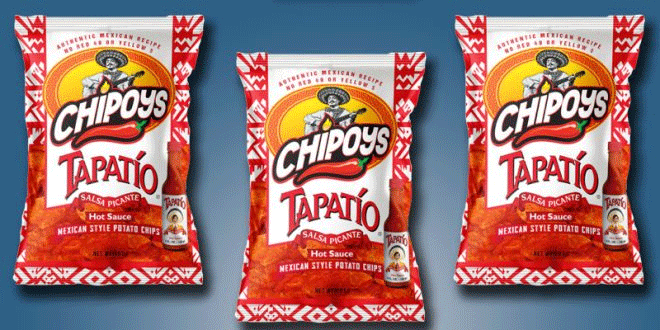
The recent announcement of Chipoys x Tapatío Salsa Picante Potato Chips underscores a powerful and enduring trend in the snack food aisle: the demand for bold, ethnic, and authentic flavors. This strategic partnership, facilitated by licensing agency Brand Central, aims to capitalize on the growing consumer appetite for culturally inspired snacks. This move is far from isolated. The global market for spicy snacks is experiencing significant growth, with a recent report from Mintel indicating that over 50% of U.S. consumers seek out new and unique flavors in savory snacks. For the potato industry, this trend translates directly into demand for specific tuber qualities. Processors require potatoes with high solids and low sugar content to achieve the consistent color and texture needed to serve as a robust canvas for these intense flavor profiles, which often include oils, powders, and seasonings.
The go-to-market strategy—launching in independent convenience stores and premiering at the NACS Show—highlights the critical role of the impulse-buy channel in driving innovation. For potato growers and processors, successful brand collaborations like this create a more stable and potentially more profitable outlet for their raw product. It shifts a portion of the potato crop from a generic commodity into a specialized ingredient for a value-added, branded product with a dedicated consumer base. This aligns with broader agricultural economic data showing that value-added products often provide a higher return per acre and can de-commoditize a farm’s output. However, this also places greater emphasis on the supply chain’s ability to deliver potatoes that meet stringent quality specifications for processing, as any defect in the chip can be amplified by strong flavors.
The Tapatío and Chipoys collaboration is a microcosm of a larger shift in the potato industry. It demonstrates that future growth and profitability are increasingly tied to the value-added and flavor innovation sectors. For farmers and agricultural professionals, this means that understanding end-market trends is no longer optional. Success will depend on forming closer relationships with processors, adapting agronomic practices to grow varieties that meet the specific needs of these innovative products, and viewing the potato not just as a bulk commodity, but as a key ingredient in a dynamic and evolving food culture.

