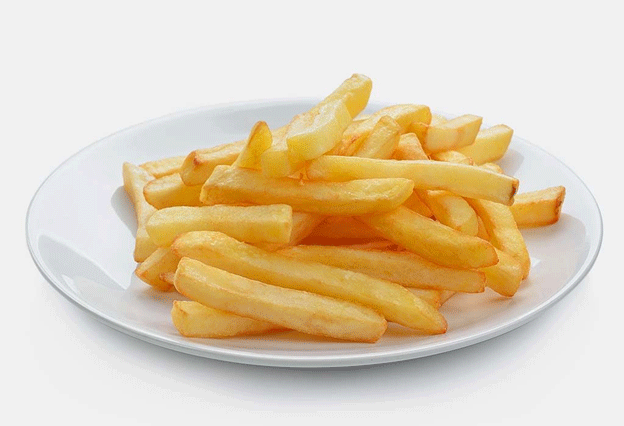
At the heart of this culinary crossroads is canola oil, the golden frying medium prized by chefs for delivering crispy, flavorful results. The U.S. imports 69% of its canola oil, and 96% of that comes from Canada, a trading partner now caught in the crossfire of tariff uncertainty.
Since President Donald Trump reintroduced a 25% tariff on Canadian goods, businesses are bracing for impact. Though some goods remain protected under the USMCA, the policy shift has already triggered panic among economists and industry insiders. The U.S. imports $1.7 billion worth of frozen French fries from Canada annually, and any cost increase in oil or potatoes threatens to inflate restaurant menu prices and compress profit margins.
For restaurants, the implications are severe. The Burger Stand in Kansas, for example, uses 630 pounds of canola oil a week, spending over $32,000 a year just on this one ingredient. With prices for canola oil already up by 50% since 2020, any additional tariff-related cost hike would force restaurants into difficult decisions: raise menu prices, change ingredients, or cut into already-tight margins.
Even large players like Lamb Weston, which supplies 80% of fries to U.S. fast-food chains, are feeling the heat. The company shut down a processing plant in Washington state in 2023, citing overcapacity amid reduced fry demand. Yet, fries remain vital: one-third of U.S. potatoes become frozen fries, and 14% of all U.S. restaurant visits in 2023 included a fry order, according to Circana research.
The looming oil crisis is causing industry-wide innovation and adaptation. Some restaurants are investing in oil filtration systems to extend the usable life of cooking oils, while others consider switching to alternative oils like soybean, sugarcane, or even a return to beef tallow—the original fat used in fast food fryers before the 1990s shift to seed oils.
However, these alternatives pose their own challenges. Beef tallow is more expensive (up to $119 for a 35-pound bucket, compared to $40 for canola), and supply chains aren’t equipped to handle nationwide demand shifts. Sugarcane oil, while durable, is twice as costly, and may not deliver the familiar flavor and texture consumers expect. Plus, scaling up production of any alternative oil comes with environmental, economic, and logistical hurdles.
For restaurants like Tuk Tuk Snack Shop in Lexington, which spends $15,000 a year on mostly domestic oil, even local suppliers are vulnerable to price spikes as global demand shifts. “We can’t charge $15 for a side of fries,” said owner Samantha Fore, echoing a widespread fear in the restaurant community.
Despite the alarm, some operators, like Good Stuff Eatery’s Catherine Mendelsohn, remain pragmatic. “If tariffs are necessary to protect borders temporarily, we’ll adapt,” she says, relying on high-end filtration systems to minimize losses. But that’s not an option for smaller, independent operators.
Ultimately, this issue underscores the interconnectedness of agricultural policy, global trade, and food systems. From Canadian canola fields to American fryers, even one tariff can ripple through the supply chain — affecting not only farmers and processors, but also consumers who may soon pay more for a side of fries.
As political decisions shape economic realities, the humble French fry becomes a case study in food system vulnerability. Canola oil tariffs may appear narrow in scope, but their impact reaches across borders, industries, and menus. For the agriculture sector, this is a reminder that even staple crops like potatoes rely on global collaboration — and that maintaining food affordability and quality requires resilient, diversified supply chains.

