As temperatures rise and soils warm up, farmers face a critical decision: plant potatoes early for a potential head start or wait to avoid summer drought risks. With the 2025 growing season underway, participants of the Gewastour are already making their moves—but opinions on the ideal planting time vary. This article explores the latest data, expert insights, and weather trends shaping this year’s potato planting strategies.
The 2025 Planting Season: Early Moves and Cautious Approaches
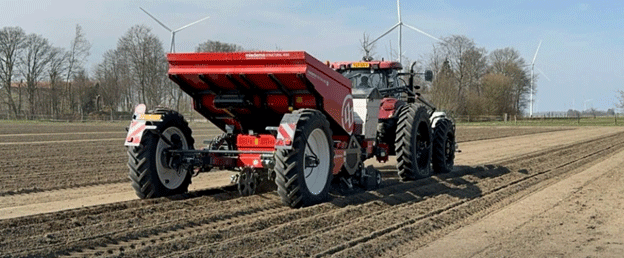
This spring has brought favorable, almost excessively dry conditions for planting across key potato-growing regions in the Netherlands. Farmers like Philip Kroes (Dronten, Flevoland) and Brian Salomé (IJzendijke, Zeeland) have already begun planting early potatoes, while others, such as Daan Tap (Elst, Gelderland), are focusing on fertilization before planting.
However, not everyone is rushing. Kees Trouw (Hellevoetsluis, South Holland) and René Mesken (Ravenswoud, Friesland) prefer to wait, citing risks tied to physiological aging and drought resistance. Mesken notes that potatoes planted too early may struggle during peak summer heat, reducing yields.
Latest Research on Planting Timing and Yield Risks
Recent studies (WUR, 2024) suggest that:
- Early planting can lead to higher early yields but increases exposure to late-summer drought stress.
- Delayed planting (mid-April to May) improves drought resilience but may shorten the growing season, impacting tuber size.
- Soil temperatures above 8–10°C are ideal for planting, but frost risk must be considered.
The 2025 European Drought Observatory (EDO) warns of potential above-average summer temperatures, reinforcing concerns about early-planted crops maturing too soon.
Farmer Strategies: Balancing Risk and Reward
- Brian Salomé plants early varieties for fresh markets but holds back on main crops like Innovator.
- René Mesken targets April 1st or later for optimal emergence and drought resistance.
- Gybert Doggen (Wouw, North Brabant) highlights that sandy soils demand later planting to mitigate drought sensitivity.
No One-Size-Fits-All Answer
The best planting time depends on soil type, regional climate, and market goals. Early planting may work for quick-turnaround crops, but main-crop growers should weigh drought risks carefully. With 2025’s dry spring, monitoring soil moisture and weather forecasts will be crucial for maximizing yields.

