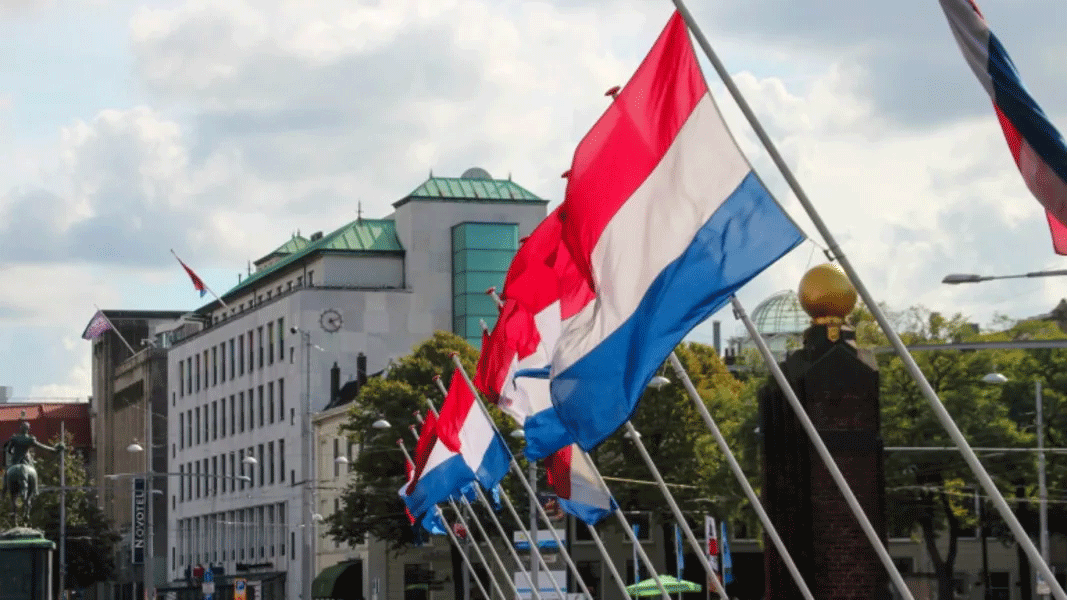
A recent high-level dialogue between the Brazilian Seeds and Seedlings Trade Association (ABCSEM) and representatives from the Dutch government underscores a strategic pivot in global agricultural partnerships. The discussions, centered on streamlining phytosanitary protocols for seed potato imports and establishing a joint Technical Working Group (TWG), signal a move beyond simple trade toward deep technical and regulatory integration. This partnership is strategically vital for both nations. For Brazil, access to the Netherlands’ elite seed potato genetics and world-leading phytosanitary standards is a game-changer. The Netherlands, despite being a global seed powerhouse, faces land constraints; the 2023 FAO report on global arable land highlights the Netherlands has one of the world’s lowest ratios of arable land per capita. Collaborating with Brazil, which possesses over 63 million hectares of arable land (as per IBGE, the Brazilian Institute of Geography and Statistics), offers a pathway to scale and a crucial gateway to other South American markets.
The core of the negotiations involves harmonizing phytosanitary requirements, a critical and often prohibitive barrier in the international seed trade. Efficient resolution here would directly address a major pain point for growers in both countries. For Dutch breeders and multipliers, it provides predictable, secure access to one of the world’s largest agricultural economies. For Brazilian potato farmers, it means reliable access to high-health, high-yielding seed varieties, which could significantly close the country’s yield gap. The planned Memorandum of Understanding (MoU), extending cooperation to innovation, sustainability, and regulatory improvement, suggests a holistic approach. This could facilitate the transfer of Dutch expertise in areas like controlled-environment agriculture and water-efficient irrigation to optimize Brazil’s production systems. Furthermore, a 2022 study in the “Potato Research” journal emphasized that climate-resilient varieties are increasingly crucial for tropical and subtropical potato production, an area where Dutch breeding programs can provide significant value to the Brazilian industry.
The burgeoning partnership between Brazil and the Netherlands represents a new model of international agricultural cooperation. It moves beyond a simple buyer-seller relationship to a synergistic alliance where knowledge, technology, and genetic resources are shared to mutual benefit. For farmers and agronomists, this collaboration promises accelerated access to improved planting material and advanced production techniques. For the global seed sector, it demonstrates that future growth and food security will be built on such strategic, knowledge-driven partnerships that leverage complementary strengths to overcome individual limitations. The success of this initiative could set a benchmark for how established agricultural economies and emerging powerhouses can collaborate to drive innovation, enhance sustainability, and strengthen the entire global food system.

