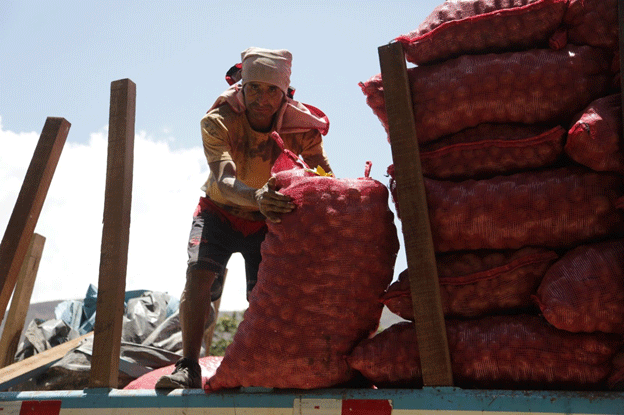
Native potatoes are not only a source of nutrition and income for Andean farmers but also a living symbol of Peru’s agricultural biodiversity. In a significant step to strengthen this heritage, the Regional Government of Huánuco, through its Regional Agricultural Directorate, has received 50 tons of native potato seeds as part of the Papa Nativa Project. These seeds will be used to cultivate three emblematic varieties: huayro rojo, amarilla peruanita, and amarilla tumbay.
The initiative targets 127 demonstration plots distributed across the provinces of Yarowilca, Dos de Mayo, Ambo, Huánuco, Pachitea, and Huamalíes, supporting smallholder farmers with improved planting materials and technical assistance. These plots will serve as training hubs for modern cultivation practices while showcasing the yield potential of high-quality seed.
Addressing Productivity Gaps in Native Potato Farming
Native potato varieties in Peru, while culturally and nutritionally significant, often suffer from low yields due to poor seed quality, limited access to technical knowledge, and lack of infrastructure. According to the International Potato Center (CIP), traditional yields in Andean communities range from 5 to 8 tons per hectare, compared to 20–25 tons/ha for improved commercial varieties under optimized conditions.
To close this gap, the Papa Nativa project is implementing a comprehensive modernization strategy, which includes:
- Construction of a 400 m² in vitro laboratory for producing disease-free planting material
- Installation of greenhouses in each participating province to ensure seed quality and adaptability
- Development of six collection centers for postharvest handling and market access
- Introduction of drip irrigation systems and tailored fertilization plans to improve water and nutrient use efficiency
With a total investment of over S/37 million (approx. USD 10 million), the project is expected to benefit 30 communities across 37 districts, increasing resilience in the face of climate variability while promoting food sovereignty and economic development.
Strategic Importance for Peru and the World
Peru is the world’s center of origin for potatoes, with over 3,000 native varieties. However, many of these are under threat due to urban migration, lack of markets, and the spread of disease. By revitalizing native potato production through sustainable and science-driven practices, projects like this one help ensure that these varieties are not only preserved but thrive in local and even global markets.
Furthermore, the FAO recognizes native potato farming as a key component of agroecological systems that contribute to biodiversity conservation, rural livelihoods, and climate adaptation.
The delivery of 50 tons of native potato seeds to Huánuco is more than a logistical milestone—it is a symbol of commitment to agricultural innovation, cultural preservation, and farmer empowerment. Through investments in technology, training, and infrastructure, the Papa Nativa Project has the potential to transform traditional potato farming into a model of sustainable, high-value agriculture in the Andes.

