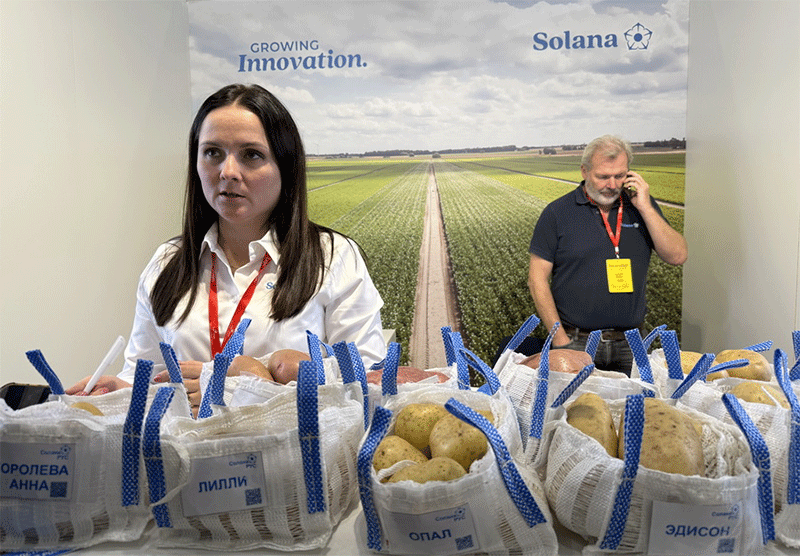
The KazAgro-2025 exhibition in Astana served as a powerful barometer for the evolving agricultural landscape in Central Asia. A key takeaway from the event was the clear and growing demand for highly specialized potato varieties, moving beyond generic table stock to cultivars bred for specific industrial purposes. At the forefront of this trend was the international seed company Solana, which reported significant interest from Kazakh farmers in its technical varieties. This demand is directly linked to a pivotal market development: the planned construction of a new chip processing plant in Kazakhstan. This facility will create a reliable, high-volume offtake channel, incentivizing farmers to adopt specialized varieties like ‘Verdi’ and ‘Opal’, which are engineered with higher dry matter content and a round shape ideal for producing uniform chips with less waste.
This shift towards contract-driven, specialized production is a global trend that mitigates the price volatility often associated with open-market table potatoes. A 2024 report by the International Potato Center (CIP) emphasized that the development of local processing industries is a critical strategy for enhancing food security and adding value in developing agricultural economies. Furthermore, the interest in dual-purpose and resilient varieties underscores the need for agronomic adaptability. The universal variety ‘Edison’, successful for both french fry production and the fresh market, offers farmers crucial flexibility. Concurrently, the rising popularity of red-skinned table varieties like ‘La Bella’ and ‘Red Lady’ reflects evolving consumer preferences. Notably, the ‘Red Lady’ variety addresses a pressing agronomic challenge: heat tolerance. With climate data from the FAO indicating increasing temperatures and more frequent heatwaves in Central Asia, the adoption of such resilient varieties is no longer optional but essential for maintaining yield stability during the vegetative period.
The dynamics at KazAgro-2025 illustrate a maturation of the Kazakh potato sector. The future of profitable potato farming in the region lies in a strategic alignment with processing industries and consumer trends. For farmers, agronomists, and farm owners, this means transitioning from a production-centric model to a market-centric one. Success will depend on selecting the right varieties—whether for specific processing traits, consumer appeal, or climate resilience—and integrating into structured value chains. The message is clear: specialization and strategic partnerships are the keys to unlocking sustainable growth and insulating against market risks.

