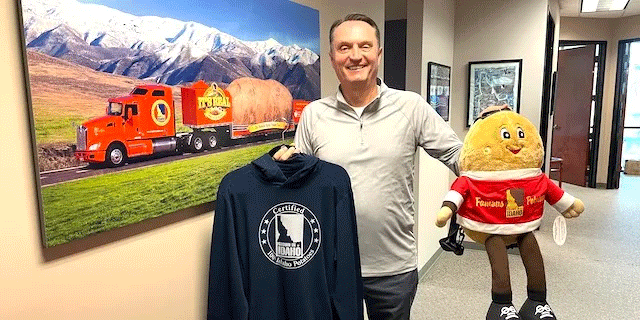
As Jamie Higham approaches his fifth year leading the Idaho Potato Commission (IPC), his strategy reflects a nuanced understanding of both global market forces and foundational industry relationships. In a recent interview, Higham detailed a plan balancing external expansion with internal realignment, critical for the state that produces nearly one-third of the U.S. potato supply.
On the global front, the IPC’s persistent campaign to gain access for fresh U.S. potatoes to Japan remains a top-tier priority, despite setbacks in high-level negotiations. This market, valued in the hundreds of millions annually, represents a significant opportunity for premium Idaho varieties. Concurrently, the IPC is capitalizing on existing trade relationships. Mexico has solidified its position as the top export market for U.S. potatoes, receiving over $200 million worth annually, with Idaho commanding a dominant share. The IPC supports this through in-country contract staff, a model also deployed in Southeast Asia—a region with growing demand but fierce competition from European and Australian suppliers. Higham emphasizes that this aggressive export push is non-negotiable, stating that Idaho’s geographical disadvantage necessitates a world-class branding and marketing effort to build loyalty and command premiums. The “Grown in Idaho” seal, recognized by 89% of U.S. consumers according to IPC internal tracking, is the cornerstone of this effort.
Internally, Higham identified a critical need upon his arrival: improving direct communication with growers, shippers, and processors. Moving beyond the IPC’s historic strength in consumer marketing, he and Vice President Travis Blacker initiated a deliberate campaign of industry listening tours. This focus on grower relations is timely. The industry faces the perennial challenge of aligning supply with demand, a task complicated by recent volatile markets. While Idaho’s planted acreage decreased by 3% in 2023 according to USDA NASS data, balancing production with profitable demand remains the central short-term challenge Higham acknowledges. His management style—setting clear expectations while fostering autonomy—is adapted to the unique role of a commission that “sells an idea, not a physical PO.” The lesson from his mentor, Kent Romrell, that “the best leaders are the best teachers,” informs this approach of engaging the industry as partners in a shared mission.
Jamie Higham’s tenure at the IPC is characterized by a two-pronged strategy: forging new international paths for Idaho potatoes while strengthening the domestic foundation from which they grow. The immediate future hinges on navigating the cyclical challenge of supply-demand balance and converting diplomatic efforts into tangible market access, particularly in Japan. Long-term optimism is rooted in the state’s powerful brand and multi-generational farming heritage, but sustained success will depend on the IPC’s continued evolution as both a global marketer and a responsive partner to the Idaho growers it serves.

