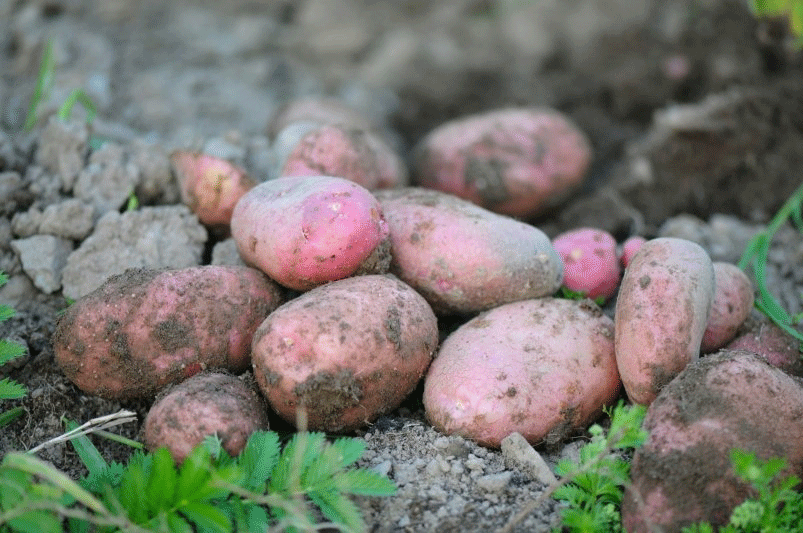
The 2025 growing season has been a testament to climatic extremes, with many regions across the country facing either debilitating drought or waterlogging rains. In such conditions, widespread crop failure in home gardens and commercial fields alike has been common. Against this bleak backdrop, a viral story from a gardening blog about the potato variety ‘Alyaska’ has captured attention, claiming an extraordinary yield of 36 harvested buckets from a single planted one. For professionals—farmers, agronomists, and scientists—such claims warrant a deeper, more critical look beyond the headline numbers.
Reported Performance and Stated Characteristics
According to the blog “Sad Zhizni,” the ‘Alyaska’ variety demonstrated remarkable resilience in a difficult year. The grower reported consistent yields of 24-27 large tubers per plant, with a harvest so plentiful it translated to a 36:1 multiplication rate from a single ten-liter bucket of seed potatoes. The described agronomic characteristics are as follows:
- Type: Mid-season (100-110 days to maturity).
- Tuber: Elongated-oval, with red skin and white flesh.
- Average Tuber Weight: 110-140 grams.
- Starch Content: A relatively wide range of 13-20%.
- Culinary Quality: Reported to hold its shape well when boiled, making it ideal for salads, roasting, and frying, but less so for purees.
- Storage: Good storability, reportedly lasting until August of the following year.
The Professional Perspective: Yield Claims vs. Scientific Scrutiny
While a 36:1 yield ratio is impressive for a home garden, it is crucial to contextualize this data. Yield is a function of genotype, environment, and management (GxExM). The blogger’s success is likely due to a favorable combination of all three, including their specific soil, watering regime, and potentially, a lower-than-average pest and disease pressure in that particular plot.
From a scientific standpoint, the reported starch content range of 13-20% is unusually broad. For context, industry standards for potato varieties typically have a much narrower range. A 7-point variance is significant and could indicate inconsistent growing conditions or a lack of formal, replicated trial data. For comparison, the widely recognized and high-yielding ‘Russet Burbank’ has a starch content typically around 17-19%, while waxy varieties for salads can be as low as 12-15%.
Furthermore, the claim of “not falling apart when boiled” (a characteristic of waxy or all-purpose potatoes) seems at odds with the high end of the stated starch content (20%), which is more typical of floury potatoes ideal for mashing. This discrepancy highlights the difference between anecdotal observation and rigorous, standardized testing.
The Bigger Picture: What Drives True Resilient Yield?
The 2025 season underscores a critical need for varieties that can withstand abiotic stresses. While a variety like ‘Alyaska’ may have performed well in one location, modern agriculture requires data from multi-year, multi-location trials. The global focus in potato breeding is increasingly on developing varieties with built-in tolerance to drought, heat, and waterlogging, as well as resistance to major diseases like late blight and nematodes.
For farm owners and agricultural engineers, the story is a reminder that high multiplication rates are only one part of the profitability equation. Equally important are factors the blog does not address: the variety’s response to fertilization, its susceptibility to bruising, its performance in mechanical planting and harvesting, and its true market quality after long-term commercial storage.
The story of the ‘Alyaska’ potato is a compelling anecdote that highlights the potential for high yields under specific, and likely optimal, conditions. However, for professionals making significant investment decisions, it should be viewed as a starting point for inquiry, not a conclusive recommendation. True progress in sustainable potato production comes from leveraging robust, scientifically-validated data from official variety trials and breeding programs. Before adopting any new “miracle” variety, it is essential to seek out replicated trial results that verify not only its yield potential but also its stability, disease resistance, and quality characteristics under a range of commercial growing conditions.

