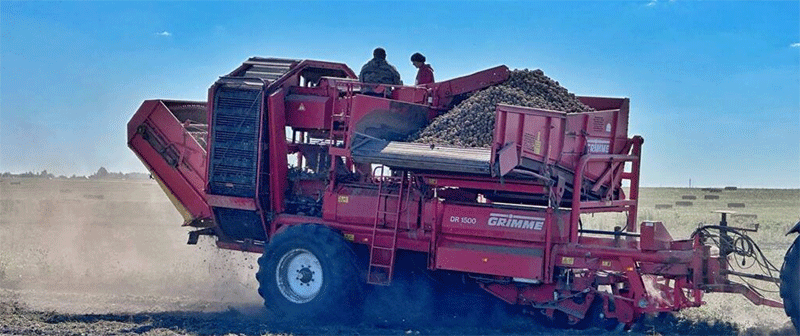
In a striking demonstration of focused expansion, the Minsk Vegetable Factory has dedicated 100 hectares to potato production this season—a tenfold increase from the previous year. This significant scaling-up is a strategic move to meet demand, with the operation projecting a total harvest of approximately 3,000 tons. Achieving a current yield of 300 centners per hectare (approx. 30 metric tons/ha), the farm exemplifies intensive production models. This level of output is not left to chance; it is the result of a meticulously coordinated harvest involving two potato harvesters and six haulm toppers working from dawn till dusk.
The agronomic strategy behind this production is a blend of international and domestic expertise. The farm cultivates popular varieties like ‘Gala’ alongside select breeding material imported from Germany, indicating a focus on both reliable performance and genetic improvement. The commitment to quality is a continuous process, extending beyond harvest to post-harvest handling. The potatoes are destined for the stabilisation funds of Minsk, requiring a multi-stage processing protocol that includes pest and weed control and rigorous soil monitoring to ensure the highest quality for long-term storage.
However, the article underscores that data and machinery are only part of the equation. The human sentiment—the “feel for the land”—is repeatedly cited as a critical success factor. As one mechanizer, Valery Gribanov, notes, “If you treat the land with respect, it will give you much in return… The land is a living organism.” This philosophy is echoed by Deputy Director Svetlana Neborskaya, who emphasizes that beyond strict protocols, success hinges on a genuine love for the work and the ability to react quickly to the daily, non-stop growth of the plants.
The operation at the Minsk Vegetable Factory presents a holistic model for modern potato production. It successfully marries ambitious scaling and scientific agronomy with the timeless, invaluable asset of an engaged and knowledgeable workforce. For agricultural professionals, it serves as a powerful reminder that while we invest in better technology and genetics, cultivating a deep-seated respect for the land and the cultivation process remains the fundamental driver of a truly successful harvest.

