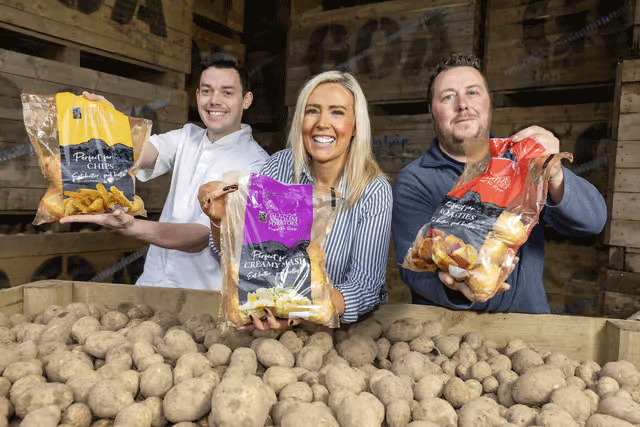
The potato industry often grapples with a fundamental disconnect: while agronomists and growers understand the distinct functional properties of different varieties, this knowledge rarely translates to the supermarket shelf, leaving consumers confused and defaulting to price-based decisions. The Glens of Antrim Group is tackling this head-on with a £250,000 investment in its new ‘Perfect for…’ range. This initiative moves beyond selling by variety name (e.g., Maris Piper or Rooster) to marketing by culinary outcome: ‘Perfect for Roasties’, ‘Perfect for Chips’, and ‘Perfect for Creamy Mash’. This strategy is a direct response to market research confirming widespread consumer confusion, a problem that has long suppressed the value potential of fresh potatoes. This aligns with a broader trend identified in a 2023 report by the Agriculture and Horticulture Development Board (AHDB), which emphasized that clear, benefit-driven messaging is critical for reversing declining fresh potato consumption in competitive markets.
The development process itself offers a blueprint for value-added production. The company conducted two years of R&D, trialing 20 varieties to identify those best suited to Northern Ireland’s growing conditions while delivering specific culinary results. The selected varieties—Lady Terra, King Edwards, and Kimi—were chosen not only for their end-use quality but also for their agronomic resilience, reportedly requiring reduced pesticide inputs. This focus on sustainable intensification is crucial; a study in the Potato Research journal highlighted that integrating disease-resistant and climate-resilient varieties is a key strategy for improving farm-level profitability and environmental footprints. The promotion of the Kimi variety for air fryers, with a claim of being “four times healthier” than frozen alternatives, directly taps into the booming health and wellness segment. The global air fryer market is projected to grow at a CAGR of over 7%, creating a substantial opportunity for fresh potato products that cater to this demand for convenient, healthier home-cooked options.
To bridge the final gap between the field and the fork, the company has integrated digital engagement through a partnership with a local chef. QR codes on packaging link to exclusive content, providing culinary guidance that ensures a positive consumer experience. This “foodservice-to-retail” tactic enhances perceived value and builds brand loyalty. For growers, this model demonstrates a clear path to decommoditization. By building a brand around trusted culinary outcomes and local provenance, the entire supply chain—from the seed selector to the farmer—can capture more value, moving away from the volatile commodity market and towards a more stable, premium-driven model.
The Glens of Antrim initiative is more than a new product launch; it is a case study in modern agricultural marketing. It proves that significant investment in R&D, coupled with a consumer-centric branding strategy, can create a powerful market differentiation. For farmers, agronomists, and farm owners, the key takeaway is that future profitability may depend less on maximizing yield alone and more on strategically aligning production with specific, value-added end markets. By selecting the right varieties for both agronomic resilience and culinary performance, and by using technology to guide the consumer, the industry can educate the market, command better prices, and secure the long-term demand for high-quality, locally grown fresh potatoes.

