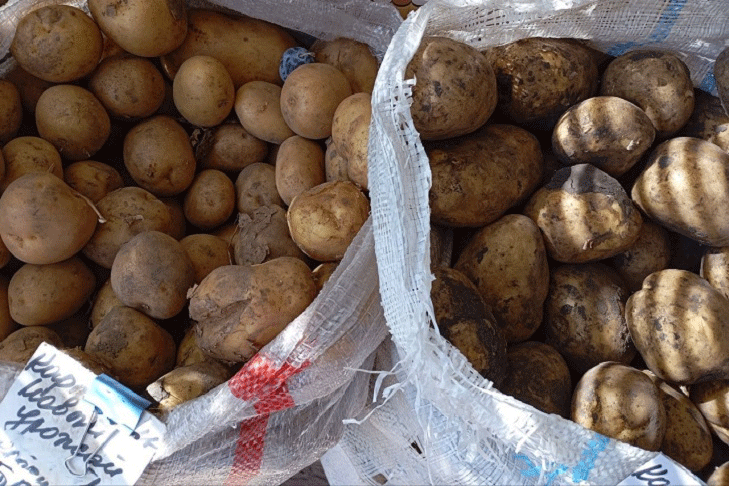
For farmers, agronomists, and farm owners, the conversation about potatoes isn’t just about red or white for dinner. It’s about understanding the genetic potential, post-harvest physiology, and market dynamics that differentiate one cultivar from another. While consumers are advised to choose waxy types for salads and starchy types for mashing, our decision-making is rooted in much deeper science and economics.
Varietal Characteristics: The Agronomist’s Viewpoint
The provided text correctly identifies the core culinary classifications: red and yellow-skinned varieties often have a medium, multi-purpose texture, while specific white-skinned cultivars are often high in dry matter, making them ideal for mashing. The key agronomic trait here is dry matter content. A 2022 study from the Journal of Agricultural and Food Chemistry corroborates that varieties with dry matter content above 20% are superior for processing (e.g., french fries, dehydrated products) due to lower oil absorption and better texture retention, directly impacting their economic value for processors and growers serving that market.
Furthermore, the advice on selecting medium-sized tubers for better nutrient density and storage is sound. Research from the International Potato Center (CIP) indicates that tuber size uniformity is a critical factor in reducing mechanical damage during harvest and handling, which is a primary gateway to storage diseases. Smaller to medium tubers often exhibit less internal bruising.
The Science of Storage and Toxicity
The text highlights critical storage issues: fungal infections (like Fusarium dry rot or late blight tuber rot) and the production of solanine. The recommendation of wooden crates or breathable mesh bags at 2-3°C is industry-standard, as this environment maintains high relative humidity (~95%) to prevent shriveling while suppressing pathogen activity through cold temperatures.
The warning on solanine is crucial. Solanine is a glycoalkaloid, a natural toxin whose production is triggered by light exposure (greening) and physical damage. Modern breeding programs, as noted in a 2023 review in Potato Research, actively screen new cultivars for low glycoalkaloid content to enhance food safety. For growers, this underscores the economic importance of proper hilling during the season and complete darkness during storage to preserve marketability and avoid liability.
Debunking “Empty Calories”: The Nutritional Data
The gastroenterologist’s insight is supported by robust nutritional science. The claim of “empty calories” is a significant market hurdle that the industry must overcome with education.
- Potassium: The figure of 25% of the daily value per medium tuber is accurate. Data from the USDA National Nutrient Database confirms that a 173g baked potato provides approximately 930mg of potassium, which is vital for cardiovascular health.
- Vitamin B6: Potatoes are an excellent source. The same serving provides about 25% of the daily requirement.
- Vitamin C: Often overlooked, a single medium potato can provide nearly 30% of the daily recommended intake of Vitamin C, a powerful antioxidant.
- Resistant Starch: The method of preparation is paramount. Research published in Nutrients (2023) shows that cooling cooked potatoes significantly increases the formation of resistant starch, a type of carbohydrate that functions like fiber, feeding beneficial gut microbiota and improving metabolic health. This transforms a boiled potato from a high-glycemic food into a much lower-glycemic one with prebiotic benefits.
The true nutritional value, and therefore consumer perception and demand, is profoundly affected by preparation. Steaming, boiling, and baking preserve nutrients, while frying can degrade heat-sensitive vitamins and add unhealthy fats.
For the agricultural professional, selecting a potato cultivar is a strategic decision that extends far beyond yield per hectare. It involves a triad of considerations:
- Market-End Use: Matching dry matter and sugar content to the target market (fresh table, processing, or specialty).
- Storage Genetics: Choosing varieties with known dormancy length and disease resistance to minimize post-harvest losses.
- Nutritional Profile: Leveraging the latest nutritional data to breed, grow, and market potatoes as a health-positive crop, not just a staple. Educating the value chain on optimal preparation methods can enhance the crop’s perceived value and demand.
By integrating this holistic view, growers and scientists can maximize profitability, reduce waste, and contribute to shifting the narrative of the potato from a simple carbohydrate to a sophisticated, nutrient-dense agricultural product.

