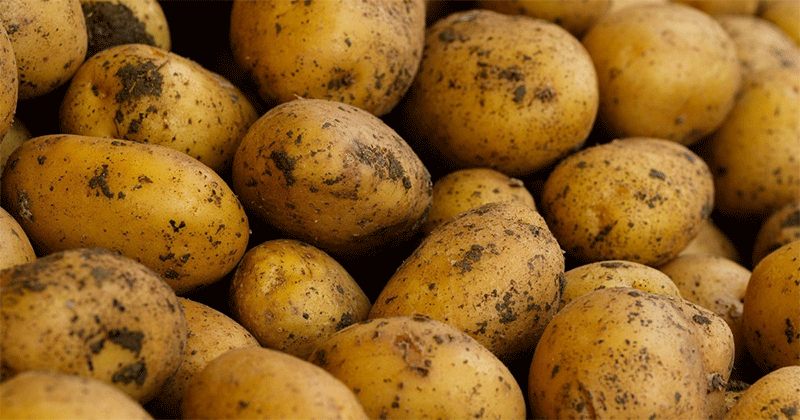
The Bulgarian potato sector is facing an existential threat, with producers pushed to the brink of protests by a confluence of agronomic, economic, and regulatory failures. According to Todor Dzhikov, Chairman of the National Association of Potato Producers, the core issues are threefold. First, severe climate impacts—a delayed planting due to a wet spring followed by a sharp drought and high temperatures—have drastically reduced yields and quality, with irrigation impossible in many key growing areas due to empty reservoirs. Second, a surge of cheap imports, primarily from Western Europe, has made local production unviable. Dzhikov states that while the production cost for Bulgarian potatoes is around 80 stotinki per kilo, imported potatoes from Poland, Belgium, France, and Germany are being sold for 25-30 stotinki, a price he describes as “brutal dumping.”
This price disparity is exacerbated by the third and most critical issue: systemic labeling fraud and a lack of supply chain transparency. Dzhikov asserts that Bulgaria is the only EU country where importers can “with absolute impunity” import potatoes from anywhere in the world—including Azerbaijan—repackage them, and sell them as “Bulgarian” to unsuspecting consumers. This mislabeling undermines consumer trust and illegally disadvantages honest local producers. While a state import registry exists, it is used solely by the Ministry of Finance and not leveraged for agricultural oversight. This stands in stark contrast to member states like Greece, which enforce stricter documentation for origin claims. The consequences are stark: potato acreage in Bulgaria has plummeted from 100,000 decares in 2019 to just 50-55,000 decares today, a catastrophic 50% decline that signals the rapid erosion of a key domestic food sector.
The crisis in Bulgaria is a stark warning for agricultural policymakers across the EU. It demonstrates how climate change and global market pressures can be catastrophically amplified by weak regulatory enforcement and a lack of political will to protect geographic identity and fair competition. Without urgent intervention to ensure truthful labeling, support climate adaptation with irrigation infrastructure, and address predatory trade practices, the Bulgarian potato industry—and the food sovereignty it represents—faces collapse. This situation underscores that financial support alone, such as the 10 billion leva invested in agriculture since 2020, is futile without robust legal frameworks and inter-institutional coordination to ensure a level playing field for producers.

