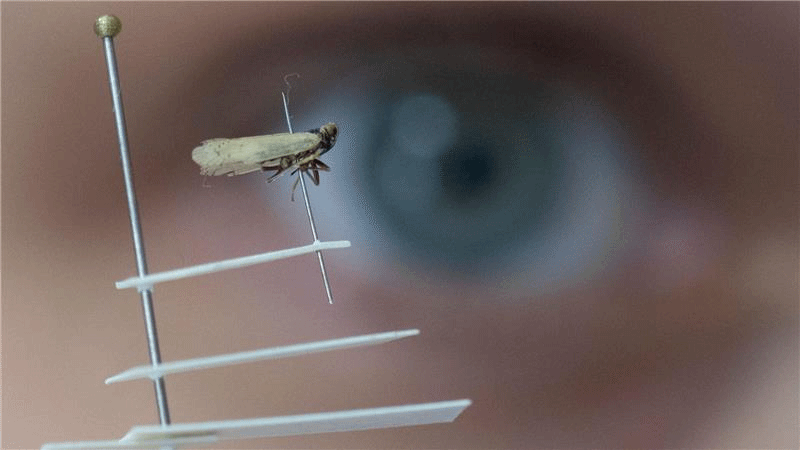
A Dual Crisis: Plummeting Potato Prices and the Looming Threat of the Reed Glassy-Winged Leafhopper
The latest harvest season has left German potato farmers grappling with a dual challenge that threatens both their economic viability and the long-term health of a key national crop. A combination of market forces and an emerging biosecurity threat has created a precarious situation, demanding immediate attention from across the agricultural sector.
Market Oversupply: A Direct Hit to Farmer Livelihoods
According to Germany’s Agricultural Market Information Society (AMI), the national potato harvest for the season reached a substantial 13.4 million tonnes. This high level of production has led to a classic case of oversupply, with the direct consequence being what industry reports describe as “prices in the basement” (Erzeugerpreise sind im Keller). This price collapse squeezes farm margins, making it difficult for producers to invest in the very technologies and pest management strategies needed to ensure future crop resilience and quality.
The Reed Glassy-Winged Leafhopper: An Unregulated and Dangerous Pest
Compounding the economic pressure is the agronomic threat posed by the Reed Glassy-Winged Leafhopper (Schilf-Glasflügelzikade), an invasive species originating from Southern and Southeastern Europe. This pest is a significant concern because it acts as a vector for serious plant diseases that can render potatoes, as well as sugar beets and carrots, unmarketable.
Critically, as highlighted by Silke Breustedt-Muschalla, spokesperson for the Lower Saxony Farmers’ Association (Landvolk Niedersachsen), there is currently no regularly approved pesticide in Germany to combat this specific pest. This regulatory gap leaves farmers with limited defensive options, putting entire crops at risk.
Emergency Measures and the Search for Sustainable Solutions
In the past season, the industry narrowly averted more severe damage through emergency authorizations (Notfallzulassungen) for certain pesticides, including a class of chemicals known as neonicotinoids. While effective, these substances are controversial due to their documented harm to bees and other beneficial insects, creating a difficult trade-off between crop protection and environmental stewardship.
The path to a regular authorization for a suitable treatment is lengthy, typically taking 1.5 to 2 years for a full application review. The industry is now pushing for an accelerated procedure to address the leafhopper threat more swiftly.
Beyond chemicals, the entire potato supply chain is seeking broader solutions. Sebastian Schwarz, Managing Director of the Union of the German Potato Industry (Unika), emphasizes that the industry is working “at full speed on solutions, starting with breeding and moving on to cultivation questions and the use of pesticides.” However, he cautions that short-term fixes are not readily available. This underscores the critical need for accelerated research into resistant potato varieties, integrated pest management (IPM) strategies, and alternative control methods—a clear call to action for agronomists and agricultural scientists.
A Question of National Food Security
The stakes extend beyond individual farms. Germany maintains a self-sufficiency rate of nearly 100% for table potatoes. Schwarz warns that this “existing food security should not be gambled away,” framing the crisis not just as an economic issue for farmers, but as a potential risk to the nation’s food supply resilience. Protecting the potato crop is thus positioned as a matter of strategic national interest.
The German potato sector finds itself at a critical juncture. The immediate price crisis, driven by oversupply, is eroding profitability, while the long-term threat of the Reed Glassy-Winged Leafhopper poses a fundamental risk to crop health and yield. Addressing this dual crisis requires a coordinated, multi-faceted response. This includes navigating the complex regulatory landscape for effective pest control, accelerating R&D into sustainable and resilient farming practices, and developing market strategies that ensure economic stability for producers. For farmers, agronomists, and policymakers, the challenge is clear: collaborate to safeguard a cornerstone of German agriculture and food security.

