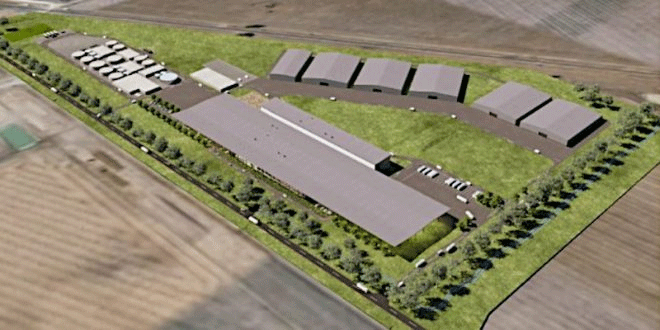
In a powerful endorsement of Australian agriculture, Dutch potato processor Farm Frites has received the green light for a A$300 million (€185 million) production facility in Dooen, Victoria. Slated to be the company’s Asia-Pacific headquarters, this plant is more than just a factory; it’s a strategic pivot that will recalibrate the regional potato supply chain. For growers, agronomists, and farm owners, this represents the single largest new offtake opportunity in years, with the facility set to process a staggering 250,000 tonnes of Australian-grown potatoes annually starting in 2027. This move aligns with a global surge in demand for processed potato products, driven by the food service sector, with the global frozen potato market projected to exceed USD 75 billion by 2028.
The choice of Dooen, within the Wimmera Agriculture and Logistics Hub, is a masterclass in supply chain logistics. Positioned between prime growing regions, it offers superior road and rail links, minimizing transport costs and maximizing freshness—a critical factor for processing quality. This development is a direct response to a growing market. According to a recent Rabobank report, global trade in frozen potato products (like fries and wedges) has been steadily climbing, with Asia-Pacific being a key growth engine. For Australian farmers, this means a stable, high-volume contract partner is entering the market, potentially de-risking expansion and encouraging investment in varietal selection and agronomic practices tailored for processing, rather than just the fresh market. The creation of 250 regional jobs also underscores the value-add this brings to the entire rural economy, moving beyond commodity export to advanced manufacturing.
Farm Frites’ investment is a clear signal that Australian agriculture is ready to compete on the global stage of high-value food processing. For primary producers, it opens a direct pipeline to international markets and provides a compelling case to invest in quality, volume, and consistency. This isn’t just a new factory; it’s a long-term partnership that will elevate the entire sector, from paddock to plate. The future of Australian potatoes is not just in growing them, but in processing them with world-class efficiency.

