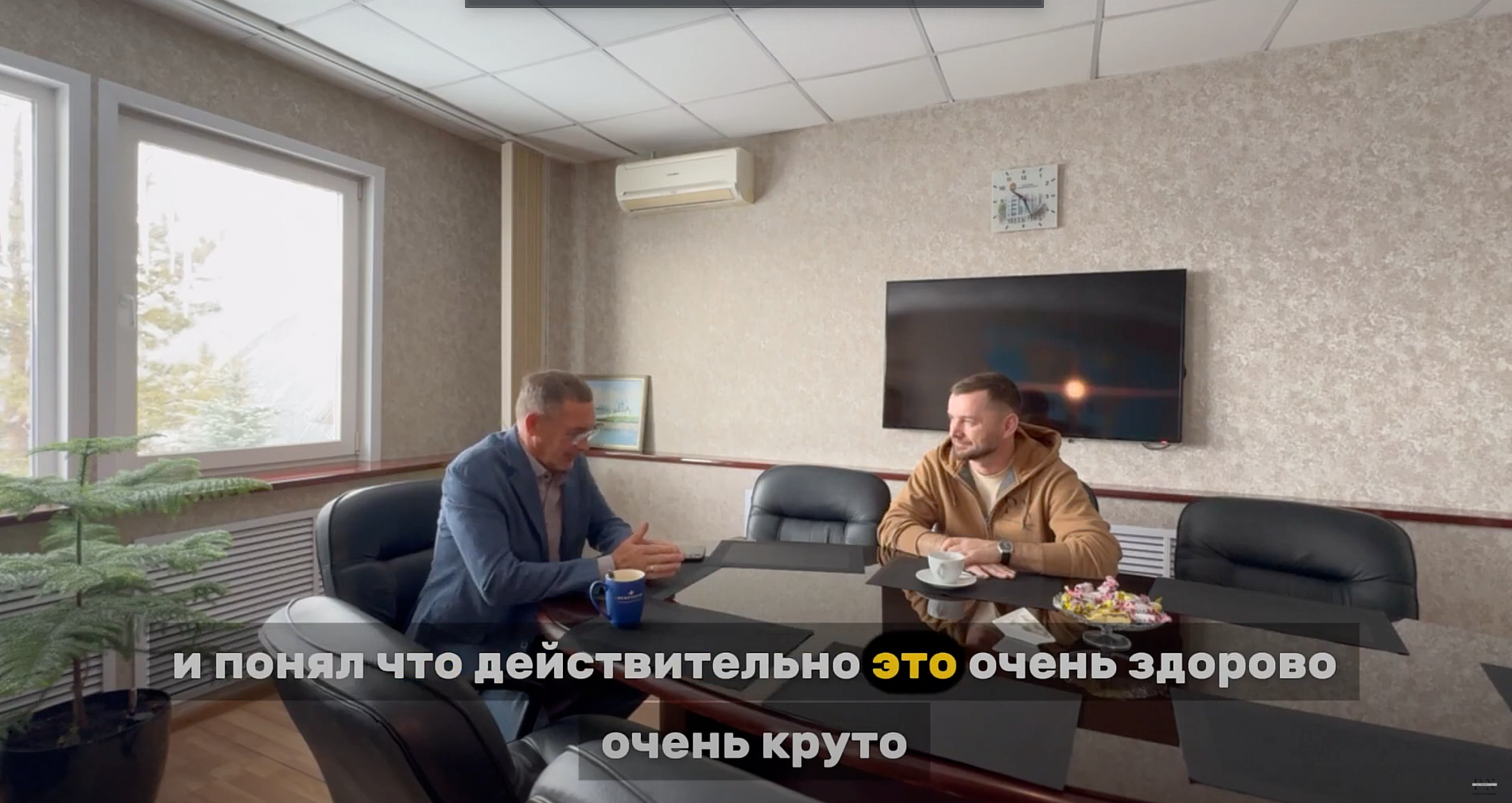
Decades — step by step. The story of “Samarskie Ovoschi” began at a turning point in history: as kolkhozes and sovkhozes were collapsing, a builder named Vladimir and a few like-minded colleagues decided to try farming. Most companions soon left — he remained alone, learning agronomy, operations, irrigation, and storage from scratch. Three decades later, this is a cluster of farms with irrigated land, storage facilities, a team of specialists, and a diversified crop portfolio.

“This enterprise is not so much a business as it is a life. It grew alongside our children, and now we’re thinking about our grandchildren and their own directions,” says the founder.
Scale as of March 2025: a multi-company group and diversification
Today, “Samarskie Ovoschi” is eight enterprises of different profiles. Core crops include potatoes, cabbage, onions, and beets. The company bought and revived abandoned sites with a legacy of land reclamation: restoring pump stations, laying pipelines, and bringing irrigation back — crucial in the Volga region’s risk-prone farming zone.
In parallel, new niches have been launched:
- Grapes and winemaking. About eight years ago, they trialed table and wine grapes — a bold bet at the 52nd parallel. The oenological direction is led by the founder’s daughter. “We’re producing respectable wines — climate and soils help,” the team notes.
- Greenhouse block → “green” directions. Greenhouses originally built for cabbage seedlings naturally expanded into floriculture: they are in their third year of tulip production and are broadening the range of potted and ornamental plants. Frequent disruptions in bulb imports fuel demand.
Import independence as a strategy: their own bulb material
After training in the Netherlands, the group is preparing to launch domestic production of tulip bulbs. Agreements for training and design are in place, and pilot plantings are underway. The goal is to reduce import dependence and meet domestic demand. “This is new for Russia — but that’s the advantage: less competition and more value for the market,” the company explains.
Seed program: from potatoes to onion sets
On the “long” agenda are potato seed production and proprietary varieties. In parallel, the farm is betting big on onion sets (including a winter cycle: black seed → set → bulb), which is especially important for northern and risk-prone zones. For several years, sets have been produced on one site while heavier soils and tougher conditions are tested on another. The plan over 3–4 years is to ramp up volumes sharply and cover a significant share of Russian demand. Purpose-built storage and infrastructure are being prepared.
Growing people in-house
Like many, the business faces an aging workforce of machine operators and a shortage of young staff. The “Samarskie Ovoschi” answer is a homegrown talent pipeline and long-cycle mentoring:
“Parachutists don’t take root. We plant ‘green seeds’ and grow specialists for years — with practice, care, good conditions, and clear prospects.”
Shelterbelts and microclimate: technology for resilience
The farm is systematically restoring shelterbelts (windbreaks) — multi-tiered, with fast-growing columnar poplars. This reduces wind-blown dust and erosion, evens out microclimates, adds yield, and speeds maturation. In tandem with modern irrigation systems, it’s a key to stable results.
In-house construction and annual irrigation expansion
The group relies on its own construction company: they design and build facilities, stand behind their work, and quickly correct defects. Each year they expand irrigated acreage — plans include launching another ≈600 ha of irrigation after design completion and pipeline procurement. This model reduces dependency on contractors and accelerates commissioning.
Succession: “living inside the enterprise”
Son Anton has been in operations since his youth; spouses of the children run critical directions. New projects are launched as stand-alone zones of responsibility, so each generation “struggles to create” and grows as true owners. The group employs up to 1,000 people across production and service units.
The founder’s entrepreneurial formula
“The main brake is fear. Once you suppress it, many doors open. An entrepreneur must both feel and count. You shouldn’t ‘help’ leaders — otherwise they’ll never become leaders.”
Key facts
- 30-year journey: from a farm startup to a group of 8 enterprises.
- Core: potatoes, cabbage, onions, beets + restored irrigation (land reclamation).
- New niches: grapes/winemaking and “green” greenhouse projects (tulips, ornamentals).
- Dutch training and preparation for domestic tulip bulb production.
- Big bet on onion sets for northern zones; growth expected over 3–4 years.
- Shelterbelts as a pillar of resilient agronomy.
- Up to 1,000 employees, with an in-house construction arm.
March 2025. Prepared from an interview with the founder of the “Samarskie Ovoschi” group.