
In Krasnoyarsk Krai, Dary Malinovki is building a full-stack potato program: in-house micropropagation, PCR diagnostics, and fieldwork aimed at stable quality and competitive cost. Founder Vasily German and team are pushing Siberian-bred varieties (purple, pink, and processing types) while tuning storage, sorting, and digital accuracy in a tough continental climate.


From lab bench to field
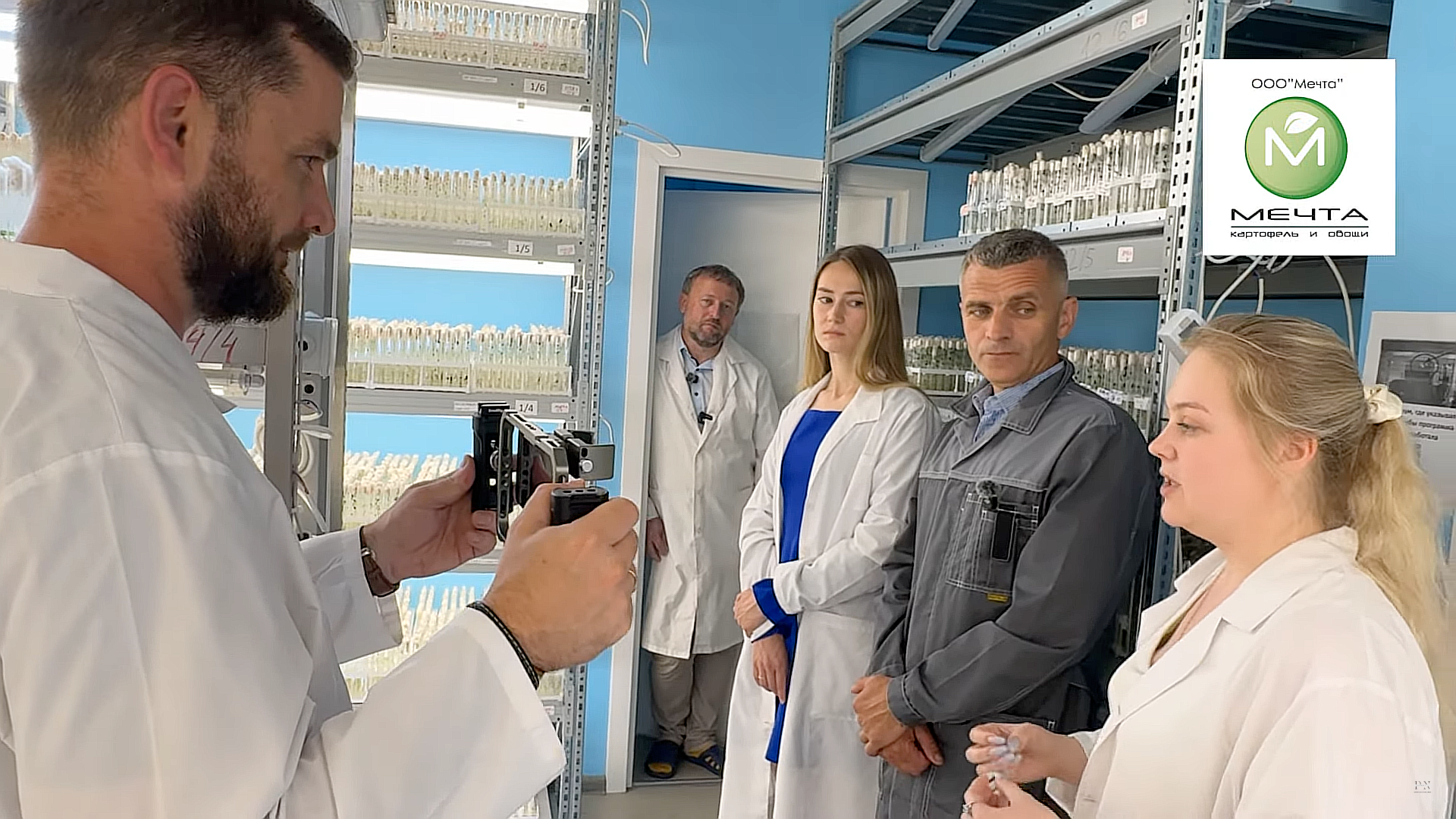
- Own tissue-culture lab (tubes, not trays) on Murashige & Skoog medium; strict sterility (autoclave, laminar flow), and PCR screening for virus/bacteria at multiple stages (lab, greenhouse, pre-field).
- Lighting trials: phyto-lamps vs cool-white. Growth is comparable; phyto-lamps cut power use, lowering minituber cost.
- Throughput vs vigor: repeated sub-culturing reduces plant potential; the team is scaling mother stock to plant after the 4th cut rather than pushing to 5th.
- Live monitoring: always-on video to track growth and environment.
- Recent lesson: over-dried peat → uneven moisture and volume losses.
Breeding & varieties (with Ural research partners)
- Bagira — purple flesh, large tubers, potential up to 70 t/ha; first field runs already 40+ t/ha. Holds color after cooking (shifts to deep blue).
- Lila — pink flesh, showy blooms; the farm’s own flagship selection.
- Argo — aimed at “eco-standard” production and disease resilience.
- DARRA — new processing type.
- Kreman — early with attractive flesh.
- Four of these will be on show at Grimme Field Day.
Health angle
In a controlled trial with a partner institute, rats fed purple/pink potato juice showed healthier GI condition vs. controls and standard yellow types—one more data point against the “potatoes are unhealthy” myth.
Fields, climate, and timing
- Classic Siberian swing: May snow, late frosts (down to –5 °C this year), then insect pressure.
- Minimal reseeding despite extremes: about 40 ha out of ~20,000 ha in the wider farm group (mostly rapeseed and cereals).
- Field agronomy emphasizes RTK guidance (≈2 cm) to stop overlaps and chemical double-passes.
Storage & post-harvest
- Perforation pattern on wooden bins is engineered for turbulent airflow across the pile (not straight through slots), improving uniform drying/cooling.
- Ozone in stores: visible short-term effect but risks microflora rebound; used cautiously.
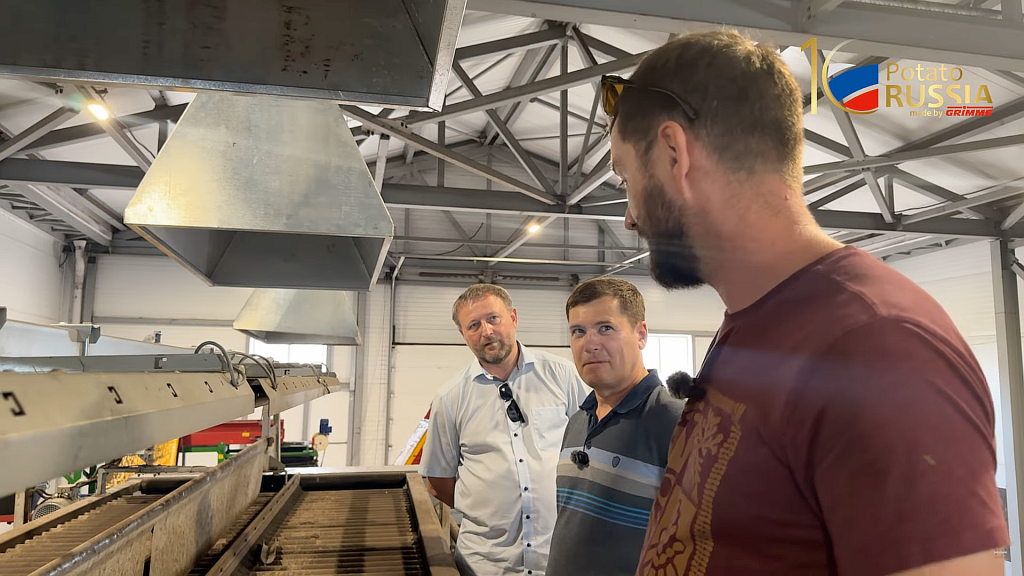
- Primary sorting is manual; throughput rises when roles are split (soil only → rot/defects → final QC) and operators rotate to prevent visual fatigue.
- Exploring optical sorting; washing seed lots is debated due to pathogen spread and drying needs.
2030 vision
- Build a digital, ecologically sound Siberian enterprise that doesn’t degrade soil and could run 100–200 years.
- Compete on revenue and profit per hectare, then scale area once per-hectare economics are locked.
At a glance
- Tube culture, PCR-verified, 65k+ plants in staggered stages.
- Phyto-lamps adopted to lower energy cost per minituber.
- Bagira (purple): ≤70 t/ha potential, 40+ t/ha achieved early.
- Lila (pink), Argo (eco), DARRA (processing), Kreman (early).
- RTK ~2 cm; disciplined logistics and sorting methods.
- Storage bins designed for turbulent airflow; cautious on ozone.
Pull quotes
- “We optimize for quality and cost—in the lab, the shed, and the field.”
- “More cutting isn’t always better: vigor drops past the 4th sub-culture.”
- “Yield counts when it’s sold, not just when it hits the store.”
- “Siberia needs a century-proof agronomy—high tech without soil decline.”