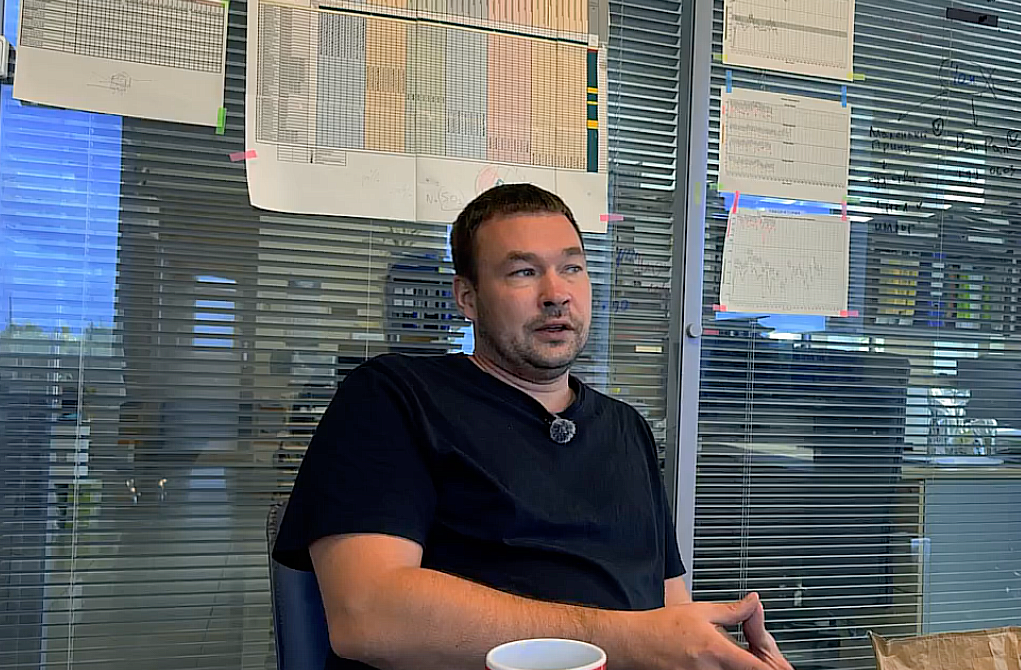
Interview with Director Ilya Dudanov as part of the International Potato Tour (Международный картофельный тур)
Pogar Potato Factory (PKF, Bryansk Oblast) is a rare full-cycle case for the industry: from in-house lab and breeding to processing and a finished ingredient for the food sector—potato flakes. We spoke with Director Ilya Dudanov about balancing field and plant, why chefs love flakes, and why investing in a workplace “ecosystem” in Russia’s heartland matters.

From family story to modern production
The company’s roots go back to the early 1990s. In the 2000s the Dudanov family acquired the factory, and the processing line launched in December 2008. The first product was potato flakes—now the core business that runs in parallel with crop farming. This “two-contour” model smooths risks: a low-yield year is offset by higher raw potato prices, while oversupply is absorbed by processing.
Proprietary varieties and quality control
PKF has developed its own varieties, including “Artur”—high-yielding with strong dry matter content, which is critical for processing. The company operates a seed lab, and the technical chain is built to control quality “from cell to consumer.”
“Smart” flakes: why chefs love them
Flakes are more than a quick side dish. They’re a quality-stable ingredient with a wide culinary range: from purée and gnocchi to coatings and chips. According to Dudanov, the starch undergoes retrogradation during production, improving functional properties. Chefs value predictable texture and flavor: flakes don’t behave like fresh potatoes (no sweetness shifts in storage, no property swings) and are easy to tune with moisture, fat, and aromatics—“as if the milk is already inside the potato,” if that’s the recipe idea.
Export, HoReCa, and a mission to strengthen the regions
PKF has long looked beyond Russia: flake exports were underway by 2010. At home, the company aims to widen use in HoReCa and is open to partnerships with distributors. Another focus is investing in people and place: better spaces, new infrastructure, higher on-site standards. “People should want to live and work here,” Dudanov stresses, framing a mission to develop Russia’s heartland through resilient production practices.
Succession and drive
Speaking about his father, Ivan Ivanovich Dudanov, Ilya notes an “endless engine” of energy and an engineer’s approach: from equipment adoption to building new facilities. Family continuity here isn’t a slogan—it’s how development is managed.
Where the flakes market is heading
Beyond traditional uses (chips, purée, snacks), flakes are becoming an ingredient for fine dining: stability, shelf convenience, and speed give them an edge. There are unexpected niches too—right up to premium pet foods, where taste and functionality are valued.
Key takeaways
- Full cycle: breeding, seed production, farming, and processing under one roof.
- Stability: flakes as a predictable, tech-friendly ingredient for HoReCa and food makers.
- Resilience: farming × processing as a natural hedge against seasonal risk.
- People & place: investing in the workplace “ecosystem” helps retain talent and lift the region.
- Exports & partnerships: long-term collaboration in and beyond Russia.
Watch the report
VK Video: https://vkvideo.ru/video-227771953_456239743
YouTube: https://youtu.be/F2u0o2XCsd8 (turn on subtitles and choose your language)
TikTok: https://www.tiktok.com/@potatoes.news