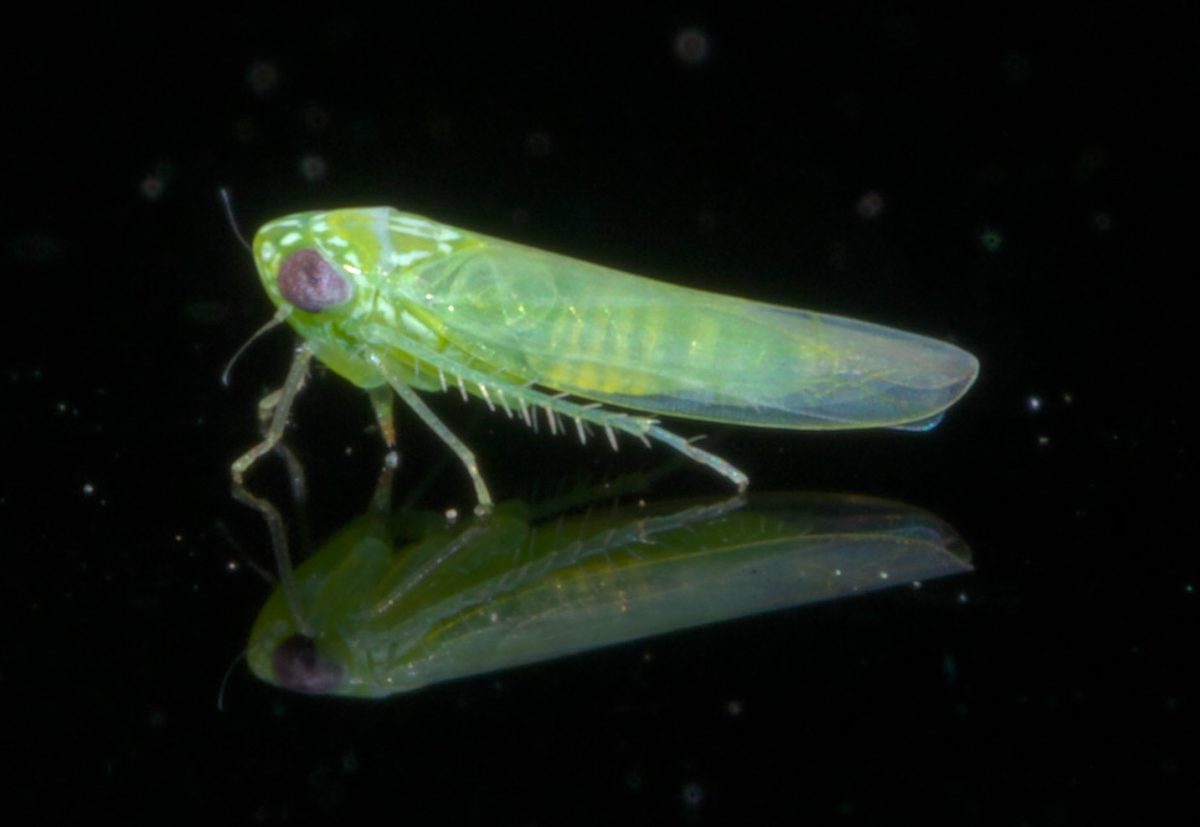
Life stages: eggs, nymphs, adults.
The potato leafhopper does not overwinter in Ontario. It is carried by upper-level winds from the United States and can arrive in Ontario as early as May. Depending on weather conditions, 2–4 generations can develop during the season. Usually two generations develop if the season is cool. By contrast, up to 4 generations have been observed in warm years.
Although the potato leafhopper attacks many crops, alfalfa is the preferred host. Alfalfa cutting sends adults flying to infest other crops. This explains why populations of eafhopper increase so rapidly in potato fields. Potato fields adjacent to alfalfa fields are at high risk of leafhopper infestation.
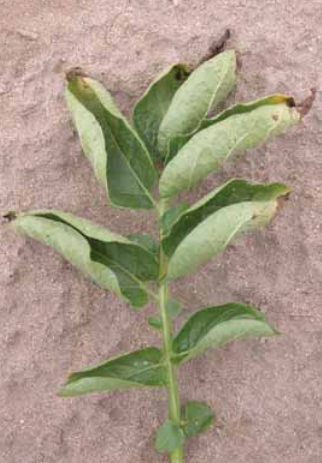
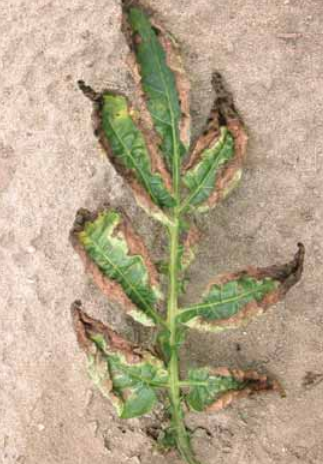
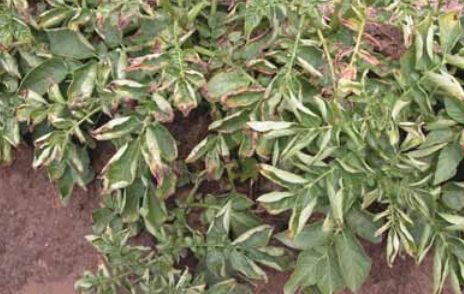
Adults and nymphs feed by sucking sap from the leaves and stems. Initially, the feeding damage causes yellowing and browning of the tips and margins of the leaves. Later, the leaf margins roll inward, resulting in the typical hopperburn damage. Usually, hopperburn is noticeable 4 to 5 days after leafhopper feeding. To avoid yield losses, leafhoppers must be controlled before hopperburn is visible.


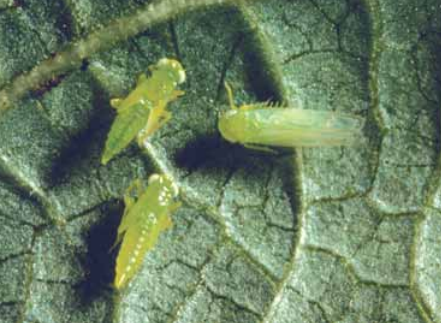
the adult stage is reached in about 2 weeks When disturbed nymphs run sideways like crabs over the edge of the leaflet to the underside