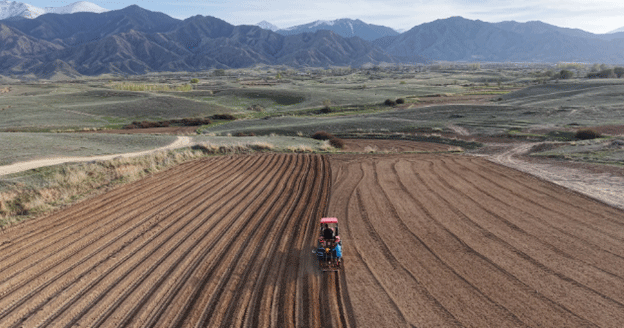
As spring planting season arrives, farmers in Jimsar County, Xinjiang, are busy sowing potatoes across 6,000 acres of land. With advanced machinery, high-yield varieties, and cutting-edge agronomic techniques, the region is setting new benchmarks in potato production. This article explores the latest innovations driving efficiency, sustainability, and profitability in one of China’s key potato-growing hubs.
Mechanization: The Backbone of Modern Potato Farming
In Jimsar County, mechanized planting has transformed traditional farming methods. On April 30, farmer Wang Zhiming began sowing potatoes across 300 acres using a state-of-the-art tractor-pulled planter. The machine simultaneously performs four tasks—trenching, fertilizing, seeding, and drip irrigation installation—significantly reducing labor costs and improving efficiency.
According to a 2023 FAO report, mechanized potato farming can reduce labor costs by 50% and increase planting accuracy by 30%, leading to more uniform germination and higher yields. Jimsar’s adoption of such technology aligns with global trends where precision agriculture is becoming essential for competitive farming.
High-Yield Varieties and Scientific Cultivation
Wang Zhiming is cultivating high-performance potato varieties such as “Wotu No. 7” and “Xisen No. 6”, which are well-adapted to the local climate and market demands. Additionally, he collaborates with the Xinjiang Academy of Agricultural Sciences to test 20 unique potato varieties and implement advanced cultivation techniques, including:
- Disease-free seed potatoes (reducing viral infections that can cut yields by up to 50%)
- Bio-fungicide seed coating (enhancing plant immunity)
- Plant immune stimulants (improving stress resistance)
- Precision fertilization via drip irrigation (optimizing nutrient uptake)
A 2024 study by the International Potato Center (CIP) found that combining disease-resistant seeds with drip irrigation can boost yields by 20-40%. Jimsar’s farmers are leveraging these methods to target 5-ton-per-mu yields (≈37.5 tons per hectare), well above China’s national average of 22 tons per hectare.
The Perfect Terrain for High-Starch Potatoes
Jimsar County, known as the “Home of High-Starch Potatoes,” benefits from fertile soil, 1,500-meter altitude, and optimal sunlight. These conditions produce potatoes with high starch content, sweet flavor, and soft texture—qualities highly valued in processing industries.
To maximize land efficiency, the local government promotes:
- High-standard farmland construction (improving soil health)
- Water-saving drip irrigation (reducing water use by 30-50%)
- Soil-testing-based fertilization (preventing overuse of chemicals)
- “Cooperative + Farmer” model (ensuring economies of scale)
By 2025, China aims to mechanize 75% of potato farming, and Jimsar is leading the way.
A Model for Sustainable Potato Production
Jimsar County demonstrates how technology, research, and policy support can revolutionize potato farming. With mechanization, high-yield seeds, and precision agriculture, farmers are achieving higher productivity, lower costs, and better sustainability. As global demand for potatoes rises—projected to grow by 1.9% annually until 2030—regions like Jimsar are well-positioned to thrive.
Key Takeaways:
✔ Mechanization cuts costs and boosts efficiency
✔ Disease-resistant seeds + drip irrigation = 20-40% higher yields
✔ Jimsar’s natural conditions favor high-quality, high-starch potatoes
✔ Government and research partnerships drive innovation

