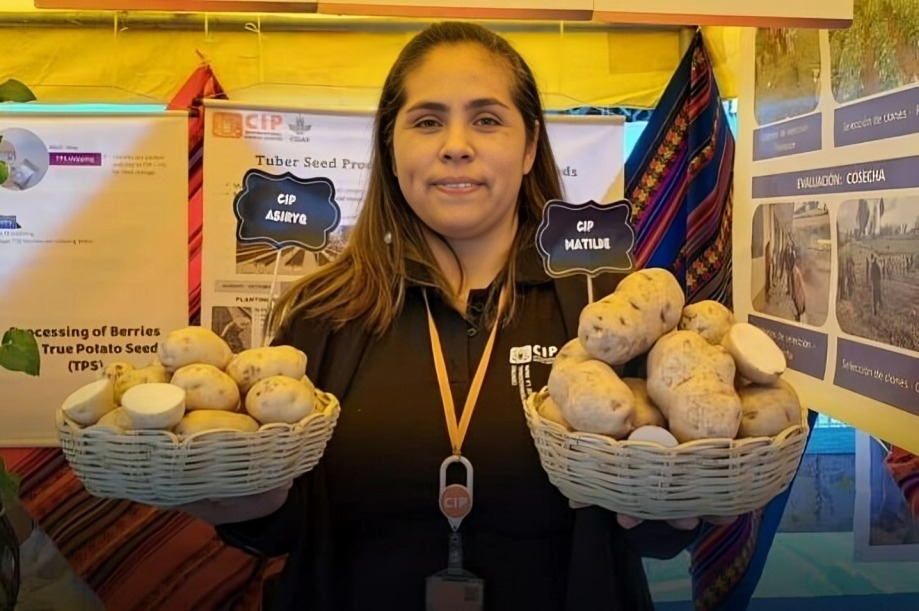
A new potato variety, branded as CIP-Asiryq, has been unveiled in Peru as a promising tool in the fight against one of the most persistent threats to potato crops worldwide: late blight (caused by Late Blight). Developed by the International Potato Center (CIP) in Lima with strong participation from Andean-farmers and indigenous communities, this variety is described as a “lifeline” for potato growers. International Potato Center+3ARGENPAPA | El portal de la papa+3La Vanguardia+3
Name and meaning
The name “Asiryq” comes from the Quechua word for “smile”, a choice reflecting the optimism the breeders and farmers share about this variety’s potential. ARGENPAPA | El portal de la papa+1
Key features
Some of the most notable attributes of CIP-Asiryq include:
- Resistance to late blight: The variety is bred to withstand late blight infection, reducing crop losses and dependence on fungicides. Forbes+1
- Reduced fungicide requirements: Because of its resistance, farmers can apply fewer fungicide treatments, which lowers cost and environmental impact. ARGENPAPA | El portal de la papa
- Faster cooking time: It reportedly cooks about 25% faster than other commercial varieties, which is attractive both for fresh markets and processing. Forbes+1
- Market potential: The variety is considered to have strong potential both for direct sale in fresh markets as well for processing. ARGENPAPA | El portal de la papa
- Breeding background: The genetic improvement drew on wild potato relatives — specifically the species Solanum cajamarquense, preserved in the CIP’s germplasm bank, which provided resistance genes. ARGENPAPA | El portal de la papa
Significance for the potato sector
Late blight remains a major threat to potato production globally. It not only triggered the historic Irish potato famine but continues to cause estimated losses of USD 3–10 billion per year worldwide. ARGENPAPA | El portal de la papa+1
In this context, CIP-Asiryq represents a step change for regions like the Andes, where diverse agro-ecological zones and climate variability (including increased humidity and rainfall) make late blight control especially challenging. Инфорегион+1
For Peru, which is the center of origin of the potato and holds immense potato biodiversity, the arrival of such a variety reinforces national food security, supports cultivation by smallholder farmers, and adds value to the potato chain.
Breeding and development process
The development of CIP-Asiryq followed a participatory and science-driven approach:
- The CIP’s germplasm bank in Lima, which is globally among the largest collections of potato genetic diversity, preserved wild relatives such as Solanum cajamarquense. These provided resistance genes used in the cross-breeding programme. La Vanguardia+1
- Field trials were conducted in high-disease-pressure zones (e.g., high humidity Andean valleys) to evaluate resistor behaviour without heavy fungicide inputs. Инфорегион
- Local farmers were engaged in evaluation, particularly in regions such as Huancayo and Huancavelica, helping to validate the variety for acceptability, yield and cooking/consumption traits. Инфорегион
- The initiative has been supported by the project “Biodiversity for Opportunities, Livelihoods and Development (BOLD)”, led by Crop Trust and funded by the Government of Norway. ARGENPAPA | El portal de la papa
Implications and next steps
For growers:
- Lower cost of fungicide and fewer spray applications may reduce the burden of disease management.
- Improved reliability of yield under disease pressure can stabilise production income.
- Cooking-time advantage and market appeal may open new market segments or strengthen existing ones.
For supply chains and processors:
- The faster cooking trait is relevant for fresh-market segments and processed potato products.
- A variety with improved disease resistance can help assure consistent supply and reduce risks linked to crop losses.
For researchers and breeding programmes:
- CIP-Asiryq stands as an example of how wild-relatives and germplasm conservation contribute to stress- and disease-resistant crops.
- The participatory approach involving farmers helps align new varieties with real-world needs (taste, cooking, acceptance).
- The model underscores how international collaboration (CIP, Crop Trust, local farmers) can deliver tangible agricultural innovation.
Considerations and outlook
While the prospect is promising, there are some considerations to keep in mind:
- While resistance to late blight is reported, ongoing monitoring in varied agro-ecological zones will be necessary to confirm performance under diverse conditions and evolving pathogen populations.
- Adoption by farmers will depend not only on disease resistance but also on seed availability, cost, yield performance, input requirements, market acceptance and consumer preferences.
- For export or processing markets, traits such as tuber size, shape, dry matter, skin‐flesh colour, storage behaviour, and processing quality will matter – ongoing evaluation is likely required.
- Scaling up seed multipliers and ensuring quality seed supply is key for widespread adoption.
- As climate change proceeds, further stresses (drought, heat, other diseases/pests) will also challenge potato production; hence, multi-trait breeding remains important.
Conclusion
CIP-Asiryq represents a significant advancement in potato breeding in Peru and potentially for other potato-growing regions. With resistance to late blight, reduced need for fungicides, faster cooking time and solid market appeal, it may serve as a strong option for farmers seeking resilient varieties in a changing climate.
For the global potato sector, this development highlights the value of germplasm conservation, wild-relatives, participatory breeding, and international collaboration.
As the variety enters wider cultivation, tracking its adoption, agronomic performance, market uptake, and supply-chain integration will be important for all stakeholders in the potato value chain — from smallholder farmers through processors and markets.
Perú: “CIP-Asiryq’”, la nueva variedad resistente a tizón tardío argenpapa.com.ar/noticia/16690-