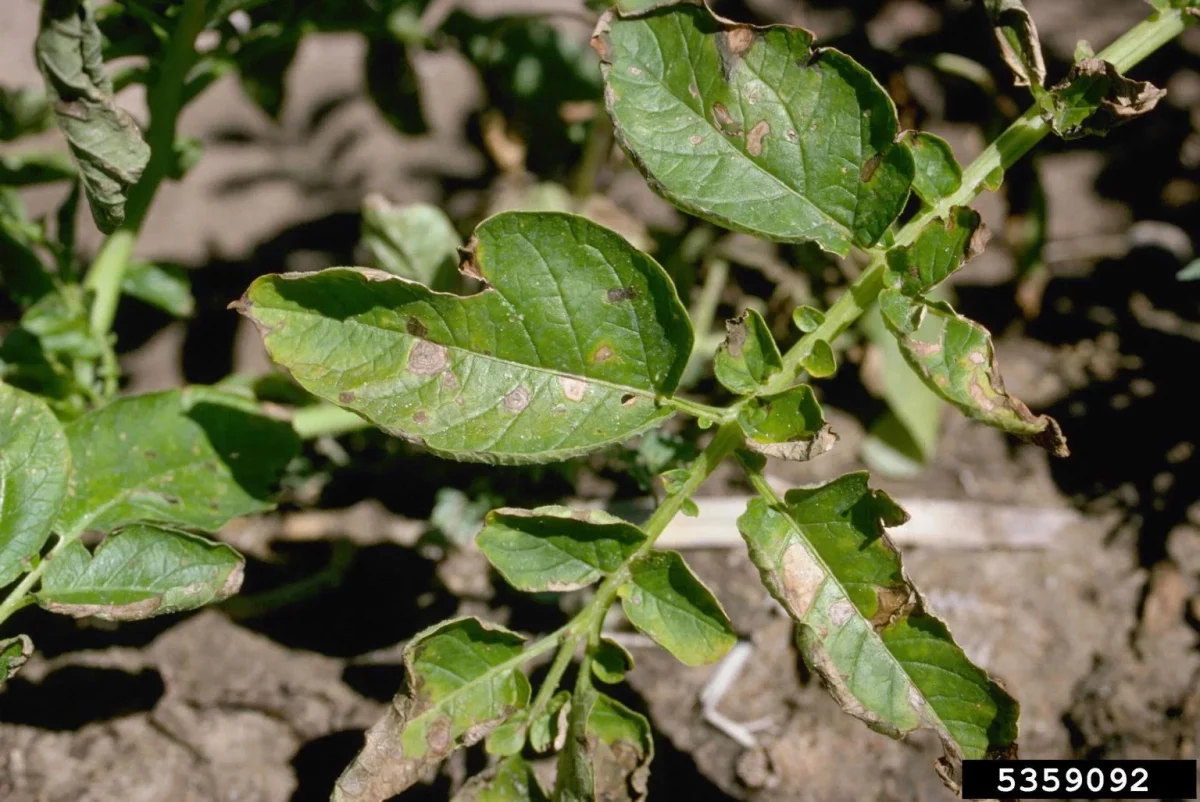
Description: Early blight is a common fungal disease that affects potato plants, leading to significant yield losses. This article provides insights into the causes, symptoms, and effective control measures for early blight potatoes.
#EarlyBlightPotatoes #PotatoDiseases #FungalInfections #CropRotation #Fungicides #ResistantVarieties
Headings:
- Understanding Early Blight Potatoes
- Identifying the Symptoms of Early Blight
- Causes of Early Blight in Potatoes
- Effective Control Measures for Early Blight
- Conclusion
Understanding Early Blight Potatoes
Early blight is a fungal disease that primarily affects the leaves of potato plants. It is caused by the fungus Alternaria solani and can spread rapidly in humid and warm conditions. Early blight can significantly reduce the yield of potato crops if left uncontrolled.
Identifying the Symptoms of Early Blight
The first symptoms of early blight appear as small, brown, and circular spots on the lower leaves of the potato plant. As the disease progresses, these spots enlarge and turn dark brown, with concentric rings that give them a target-like appearance. The leaves of the plant turn yellow and start to wilt, eventually leading to defoliation.
Causes of Early Blight in Potatoes
Early blight is caused by the fungus Alternaria solani, which can survive in soil debris and infected plant material. The fungus can also spread through airborne spores and contaminated equipment, including tools and machinery. Warm and humid weather conditions are ideal for the growth and spread of early blight.
Effective Control Measures for Early Blight
There are several effective control measures for early blight potatoes, including:
- Crop Rotation: Avoid planting potatoes in the same location for consecutive years.
- Sanitation: Remove and destroy infected plant debris and maintain a clean growing environment.
- Fungicides: Apply fungicides to protect the potato plants from early blight infection.
- Resistant Varieties: Plant potato varieties that are resistant to early blight.
Conclusion
Early blight is a common fungal disease that affects potato plants, leading to significant yield losses if left uncontrolled. It is caused by the fungus Alternaria solani, which can spread rapidly in warm and humid conditions. Effective control measures for early blight include crop rotation, sanitation, fungicides, and planting resistant varieties.